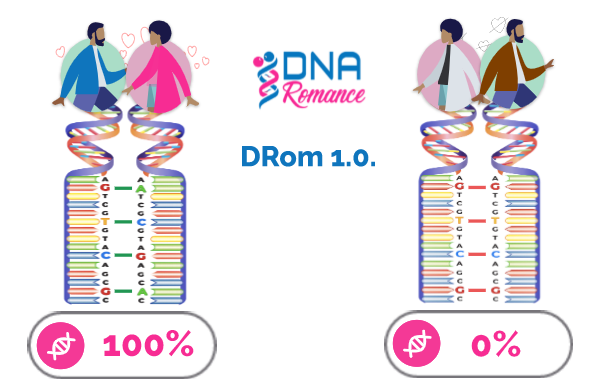
DNA Romance predicts "Chemistry" online using the DRom 1.0 algorithm. This algorithm assesses 100 specific markers within your DNA, focusing on genes proven to be involved in attraction and reproduction. Studies have shown that people with varied DNA markers in the Major Histocompatibility Complex (MHC) tend to find each other’s scent appealing and often enjoy more durable romantic relationships .
DNA Romance يوضح أيضًا. توافق الشخصية يستخدم أنواع الشخصية المستخرجة من اختبارات التخصصية، ويتيح للمستخدمين تقييم استخدام الفلاتر لمشاركة المصالح المشتركة و جاذبية بدنية بناءً على صور المطابقة لهم، يوفر DNA Romance خدمة تحليل الشخصية الخاصة بالأشخاص لمساعدتهم في العثور على الشريك المثالي. second genetic algorithm DRom 2.0 يستخدم نموذج ذكاء علمي مدرب بعلامات DNA ذات صلة لتنبؤ الصفات الفينوتيكية بدقة عالية. DRom 2.0 يكمل DNA Romance. نظام التحقق من الملف الشخصي يقدم هذا الأمر مجموعة متعددة من الاختبارات التي تساعد على تحديد صحة ملف المستخدم بشكل أفضل.
استكشف لدينا
تقييم توافق الشخصية
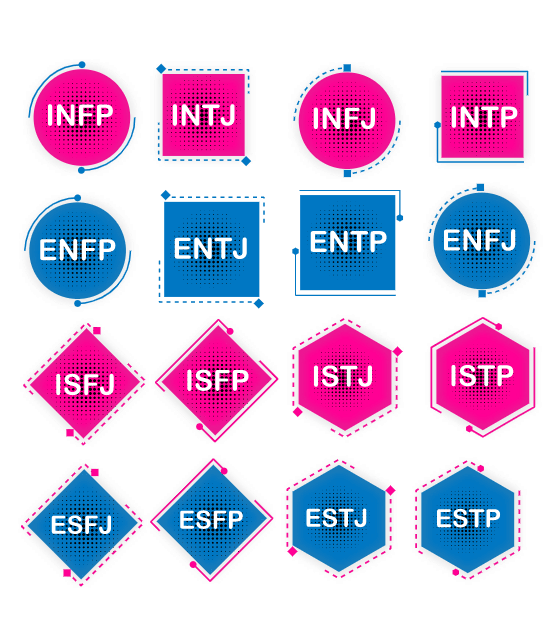
inspired by the renowned Jung/Myers-Briggs 16 personality types. Developed over a century ago by Swiss psychiatrist Dr. Carl Jung and further refined by Isabel Briggs Myers and Katherine Briggs, this psychometric test has stood the test of time. Recognized as the Myers-Briggs Type Indicator®, it's widely used in organizational psychology.
DNA Romance utilizes this personality compatibility algorithm to predict potential connections between both singles and couples. DNA Romance's algorithms strategically assigns higher compatibility scores to similar personality types, and lower scores to those that may conflict.
DNA Romance predicts "Chemistry" using DRom 1.0, an algorithm that analyses Single Nucleotide Polymorphisms (SNPs)confirmed to influence relationship choice in several independent studies. Here we present just a few of the research papers we evaluated in order to develop DRom 1.0 .
Jokiniemi A, Turunen T, Kohonen M et al. (2025) Female-mediated selective sperm activation may remodel major histocompatibility complex-based mate choice decisions in humans Heredity 134, 321–330.
*** This study reveals a paradox: women prefer the body odours of MHC-similar men, but sperm from MHC-dissimilar men exhibit higher motility when exposed to female follicular fluid. This suggests that the most attractive males may not necessarily be the most optimal partners in terms of fertilisation success, indicating that post-copulatory selection can remodel pre-mating mate choice decisions.
Havlíček J, Winternitz J, Roberts S (2020) Major histocompatibility complex-associated odour preferences and human mate choice: near and far horizons Philosophical Transactions of the Royal Society B, 375:20190260.
*** A comprehensive meta-analysis examining MHC-based mate choice in humans. The analysis found no significant overall effect of MHC-similarity on human mate selection when combining genomic studies, relationship satisfaction measures, and odour preference experiments. The authors recommend larger, more diverse samples and greater focus on mechanisms of MHC-associated pregnancy loss.
داندين-روولاند سي، لورانت ر، دالارا إي، توبانس ب وشايكس ر (2019) الدليل الجينومي للزواج المختلط المختلف لمجموعة المواصفات الجينية المشتركة في البشر
This study on major histocompatibility complex (MHC) and mate choice in humans suggests that while couples in Northern Europe tend to exhibit MHC-dissimilarity, potentially indicative of a biological influence on mate choice, social and/or cultural factors in other regions, like Israel, may override or obscure such biologically-driven mating preferences.
Birnbaum GE, Zholtack K, Mizrahi M & Ein-Dor T (2019) الدواء المرهق: إيقاف استخدام الأدوية الأرشادية للأطفال يزيد من جاذبية الأشخاص البديلين Evolutionary Psychological Science volume 5, pages 276–285
*** الوقاية الأخذية الهرمونية تعدي تفضيلات الإناث للرجال الأنسانيين الأكثر رعاية، ولكن إيقاف استخدامها تعود هذه التفضيلات، مما يعزز الجذب إلى الرجال الأكثر توافقاً جينياً، خصوصاً خلال المراحل الحافظة العالية، مما قد يحرج السعي إلى الأشخاص البديلين.
Wedekind C (2019) A predicted interaction between odour pleasantness and intensity provides evidence for major histocompatibility complex social signalling in women Proc. R. Soc. B 285:20172714.
*** يصف الورقة العلاقة بين المجموعة الرئيسية للتوافق الأنسجة (MHC) وتفضيلات الرائحة في البشر، مناقشة النتائج السابقة وتحليل كيف يمكن أن تؤثر الحلاقة الذراعية وعوامل أخرى على الاستشعار للرائحة الجسدية وربطها بMHC، مع إعادة تحليل البيانات السابقة التي تكشف أن اللطف والكثافة الرائحة يمكن أن تتفاعل مع عدم تشابه MHC في التأثير على الإشارات الاجتماعية من خلال الرائحة، مشيرا إلى علاقة متعقدة بين MHC، استشعار الرائحة، والاتصال الاجتماعي.
Wu K, Chen C, Moyzis RK, Nuno M, Yu Z and Greenberger E (2018) More than skin deep: Major histocompatibility complex (MHC)-based attraction among Asian American speed-daters Evolution and Human Behavior. 39(4):447-456.
*** في سياق التعارف السريع، أظهرت النساء (وليس الرجال) تفضيلات للشريكين بناءً على التكامل المحدد لمجموعة المواصفات التناسلية الكبرى (MHC) من خلال تحليل SNP، مع أن الأنواع المختلفة من SNP تؤثر باتجاه مختلف بناءً على القرب من الجينات HLA الرئيسية، وأن الفهارس المستندة إلى MHC كانت تحمل تأثير مماثل للصفات الشخصية المقدمة من نفس الشخص في تنبؤ العرض للتاريخ الثاني لكلا الجنسين.
Henningsson S, Hovey D, Vass K, Walum H, Sandnabba K, Santtila P, Jern P, Westberg L (2017) A missense polymorphism in the putative pheromone receptor gene VN1R1 is associated with sociosexual behavior Transl Psychiatry. 7(4):e1102.
*** تشير الدراسة إلى وجود علاقة معنوية كبيرة بين البوليمورفيسم في الجين VN1R1، المتعلق بمستقبل الفيروموناسال النوع 1 للبشر (جزء من نظام يسوغ التأثيرات الفيرومونية)، والسلوك الاجتماعي الجنسي، بشكل خاص بشأن الأحداث الليلية الوحيدة، مما يشير إلى أن التشيموسيجنالينج قد يلعب دورا في تعديل التفاعلات الاجتماعية للبشر.
برجر دي، مولي سي، مارتي إي، سيمي ه، أوبرتير م، جاندا ج، ماينيكي-تيلمان س وويدكيند سي.(2017) التفضيلات المرتبطة بمؤشر المناعة الجسمية في الحصانات الأنثى في الدورة الشهرية (Equus caballus).
تبحث هذه الدراسة في تأثير جينات معقد التوافق النسيجي الرئيسي (MHC) ومستويات التستوستيرون على تفضيلات التزاوج لدى الخيول الإناث، حيث وجدت أن الفرس أظهرت اهتمامًا مرتفعًا تجاه الفحول غير المتوافقة مع MHC خلال مرحلة الديستروس (الفترة غير التناسلية)، ولكن قد تتجاوز خصائص الذكور غير المرتبطة بـ MHC، مثل الصفات الجسدية أو الإشارات السلوكية، تأثيرات MHC خلال مرحلة الاستروس (الفترة التناسلية)، حيث يكون السياق ومرحلة الدورة حاسمة في اختيار الشريك.
Sherlock JM, Sidari MJ, Harris EA, Barlow FK, Zietsch BP (2016) Testing the mate-choice hypothesis of the female orgasm: disentangling traits and behaviours Socioaffect Neurosci Psychol. 6:31562.
*** توصي الدراسة بأن النساء تشعر بتنوع في تكرار مرات الإرتجاع مع شريكات مختلفة، وأن الشريكات التي تحقق أعلى معدلات الإرتجاع يُقدرون بأنهم أكثر روحانية وإبداعاً ودفئة وإخلاصاً ورائحة أفضل، وأنهم أيضاً أكثر توجهاً لرضا الشريك الجنسي، مدعماً جزئياً فكرة الاختيار الزوجي للإرتجاع الأنثوي التي تفترضه كميزة لاختيار الشريكات الجودة العالية.
Kromer J, Hummel T, Pietrowski D, Giani AS, Sauter J, Ehninger G, Schmidt AH, Croy I (2016) Influence of HLA on human partnership and sexual satisfaction Sci Rep. 6:32550.
*** تشير الدراسة إلى أنه في البشر، يمكن أن تؤثر الغياب عن تطابق HLA (عنصر فردي في الجهاز المناعي) في اختيار الزوج والرضا الجنسي، والذي يمكن أن يحدث من خلال الكشف عن الأحادي الأزعاج الشمولية المتعلقة بالتوافق الوراثي، مشابهة للآليات المشاهدة في الحيوانات الأخرى، مما يشجع التنوع الوراثي والمقاومة ضد المضادات الحيوية في الأجيال اللاحقة.
Wlodarski R. and Dunbar RIM. (2015) What's in a Kiss? The Effect of Romantic Kissing on Mate Desirability Evol Psychol. 12(1): 178–199.
*** توصل هذه الدراسة إلى أن القدرة المشاهدة على التقبيل الرومانسي يؤثر على تقييم الأشخاص المحتملين للزواج، مما يزيد من الجذبية خصوصا للنساء في سياق الجنس العادي، وبينما يمكن للإشارات البصرية تجاوز تأثير المعلومات المتعلقة بالتقبيل في بعض السياقات الزواجية، يبدو أن التأثير الجذاب للمعلومات البصرية يكون أكثر قوة للرجال من أجل النساء، مشيرا إلى دور متعدد الطبقات الذي يلعبه التقبيل في تبيين جودة الزواج والجذبية بالإضافة إلى الإشارات الأخرى.
برجر دي، دوليفو جي، مارتي إي، سيمي هو وويدكيند سي.(2015) النوع الأساسي لمؤشر التوافق الأكبر للجنس الأنثى يؤثر على مستويات التستوستيرون وعدد الحيوانات البشرية في الحصان (Equus caballus)
تقوم هذه الدراسة بدراسة كيفية تأثير مجموعة التوافق الرئيسية (MHC) على إستراتيجيات الإنتاج الذكوري في الخيول. وأظهرت البحث أنه عندما يتعرض الحصان للإناث التي تتميز بأنواع MHC غير متشابهة، فإنها تظهر مستويات تستوستيرون أعلى وتنتج عدداً أكبر من الحيوانات البشرية في كل إجراء إخراجي، مما يشير إلى أن الإشارات المرتبطة بMHC يمكن أن تؤثر على إنتاج التستوستيرون وخصائص البويضة، وبالتالي تأثير الإستراتيجيات الإنتاجية.
Christakis NA and Fowler JH (2014) الصداقة والاختيار الطبيعي PNAS. 11:10796–10801.
*** تظهر الدراسة أن البشر يميلون إلى تشكيل الصداقات مع الأشخاص الذين لهم نوعيات نوعية متشابهة - مماثلة لمستوى الأحقاد الرابع - عبر الوحدة الوراثية الكاملة، وبينما تتشابه نوعيات معينة بشكل إيجابي (homophilic)، فإن الأخرى تتشابه بشكل سالب (heterophilic) بين الأصدقاء، مع مجموعات محددة من الجينات ذات علاقة بنظام الشم والمناعة يلعبان دورا في تشكيل الصداقة، مقترحا أن الأصدقاء قد يعملون ك"الأقارب الوظيفية" ويشير إلى أن النوعيات المتشابهة قد تقدم أرباح تناسبية متكاملة التي قد تؤثر على التطور البشري الحديث.
Laurent R and Chaix R (2012) MHC-dependent mate choice in humans: Why genomic patterns from the HapMap European American dataset support the hypothesis BioEssays. 34(4):267-71.
*** This study supports the hypothesis that humans tend to choose mates with different MHC (Major Histocompatibility Complex) genes than their own, which may promote genetic diversity and immune system strength in offspring.
Lie HC, Simmons LH and Rhodes G (2010) Genetic dissimilarity, genetic diversity, and mate preferences in humans Evolution and Human Behavior 31:8–58.
*** تستكشف هذه الدراسة تأثير العوامل الوراثية، وخاصة معقد التوافق النسيجي الرئيسي (MHC)، على تفضيلات الشركاء لدى البشر، حيث اكتشف أن الذكور يميلون إلى تفضيل الإناث ذات الـMHC المختلف في كل من سياقات التزاوج القصير الأمد والطويل الأمد، بينما تؤثر التنوع الوراثي على تفضيلات الشركاء لدى الذكور والإناث عبر سياقات التزاوج المختلفة، مما يدعم دورًا مهمًا للـMHC في اختيار الشريك البشري ويقترح أن هذه التفضيلات قد تعمل على تعزيز التنوع الوراثي في النسل.
Lie HC, Rhodes G and Simmons LH (2010) Is genetic diversity associated with mating success in humans? Animal Behaviour. 79, 4:903-909
*** تشير هذه الدراسة إلى أنه في البشر، وخاصة الإناث، يرتبط التنوع الجيني، لا سيما داخل معقد التوافق النسيجي الرئيسي (MHC)، بنجاح أكبر في التزاوج، يقاس بعدد الشركاء الجنسيين، مما يدعم مفهوم أن العوامل الجينية، التي قد تكون مرتبطة بوظيفة جهاز المناعة، تلعب دورًا في نجاح التزاوج البشري، بينما لم يتم العثور على ارتباط كبير في الذكور.
Chaix R, Cao C, and Donnelly P (2008) Is Mate Choice in Humans MHC-Dependent? PLOS Genetics, 4 (9)
*** تشير الدراسة إلى أنه بينما قد تفضل السكان الأمريكيون الأوروبيون الشركاء الذين يختلفون في MHC، مما يختار التنوع في أنظمة المناعة لدى النسل، إلا أن مثل هذا النمط لم يُلاحظ في السكان الأفارقة الذين تم فحصهم، مما يشير إلى أن تأثير MHC على اختيار الشريك يمكن أن يكون معتمدًا على السياق وقد يتشكل بواسطة عوامل متنوعة.
Schwensow N, Fietz J, Dausmann K, Sommer S (2008) MHC-associated mating strategies and the importance of overall genetic diversity in an obligate pair-living primate Evol Ecol. (22) 617-636
*** تستكشف الدراسة اختيار الشريك في الليمور القزم ذو الذيل السمين، حيث وجدت أن الإناث تفضل الذكور الذين يتمتعون بتنوع جيني أكبر في MHC وتداخل أقل في MHC كآباء اجتماعيين وجينيين، بينما لا تؤثر التغايرية الجينية العامة والقرابة بشكل كبير على اختيار الشريك؛ قد تحدث التزاوجات خارج الزوجية للتخفيف من عدم التوافق الجيني، مما يبرز تفاعلًا معقدًا بين فرضيات "الجينات الجيدة كالتغايرية" و"التزاوج غير المتجانس" في استراتيجيات التزاوج لدى الرئيسيات.
Wedekind C (2007) The Major Histocompatibility Complex and Perfumers' Descriptions of Human Body Odors Evolutionary Psychology.5(2): 330-343
*** تظهر هذه التجربة ارتباطًا بين معقد التوافق النسيجي الكبير (MHC) والأوصاف اللفظية لروائح جسم الإنسان، مما يوضح أن العطارين المحترفين يمكنهم، إلى حد ما، التعبير عن مكونات رائحة الجسم المرتبطة بـ MHC، مما يبرز تأثير MHC على الإدراك الشمي البشري وربما، اختيار الشريك، نظرًا للدور الحاسم لـ MHC في وظيفة الجهاز المناعي وتأثيره الملحوظ سابقًا على رائحة الجسم واختيار الشريك.
Garver-Apgar CE, Gangestad SW, Thornill R, Miller RD and Olp JJ (2006) Major histocompatibility complex alleles, sexual responsivity, and unfaithfulness in romantic couples Psychol Sci, 17(10): 830-835.
*** In the context of romantic couples, the study finds that as the proportion of shared Major Histocompatibility Complex (MHC) alleles increases, women's sexual responsivity to their partners decreases, while their number of extra-pair sexual partners and attraction to men other than their primary partners, especially during their fertile phase, increases, suggesting that MHC-dissimilarity might play a role in sexual attraction and partner selection, potentially driven by underlying genetic and reproductive strategies to enhance offspring immunocompetence by maintaining genetic diversity.
Roberts CE, Gosling LM, Carter V and Petrie M (2006) MHC-correlated odour preferences in humans and the use of oral contraceptives Proc. R. Soc. B 275, 2715–2722
*** This study investigates how oral contraceptives influence women's preferences for certain male odours, which are known to be influenced by genes in the Major Histocompatibility Complex (MHC). Previous research has indicated that female preference for MHC-dissimilar male odour may function to increase offspring heterozygosity or minimize inbreeding. Interestingly, it has also been suggested that women using oral contraceptives tend to prefer the scent of MHC-similar males, which runs contrary to this logic. The study utilized a longitudinal design to test women before and after initiating contraceptive pill use, comparing their preferences to a control group of non-pill users. While the study didn't find a significant difference in ratings between odours of MHC-dissimilar and MHC-similar men during the follicular cycle phase in general, it did unearth that single women tended to prefer the odour of MHC-similar men, whereas women in relationships leaned towards the odour of MHC-dissimilar men. This latter finding aligns.
Wedekind C (2006) The Intensity of Human Body Odors and the MHC: Should We Expect A Link? Evolutionary Psychology. 4:85-94
*** تحدد هذه الدراسة العلاقات بين بعض جينات MHC (مجمع التوافق النسيجي الرئيسي) وشدة وراحة روائح جسم الرجال، مكتشفة أن الرجال الذين لديهم على الأقل مستضد MHC متماثل الجينات لا ينبعث منهم روائح أكثر كثافة بشكل ملحوظ من المتغايرين، ومع ذلك تُعتبر روائحهم أقوى بشكل ملحوظ من قبل النساء ذوات MHC مختلف.
Pause BM, Krauel K, Schrader C, Sojka B, Westphal E, Müller-Ruchholtz W, and Ferstl R. (2006) The human brain is a detector of chemosensorily transmitted HLA-class I-similarity in same- and opposite-sex relations Proc. R. Soc. B (2006) 273, 471–478 doi:10.1098/rspb.2005.3342
*** This study reveals that humans subconsciously detect and respond to body odors from individuals with similar HLA (Human Leucocyte Antigen) genetic markers, which might play a critical role in social interactions and mate selection by acting as subtle social signals within both same-sex and opposite-sex relationships.
Martins Y, Preti G, Crabtree CR, Runyan T, Vainius AA and Wysocki CJ (2005) Preference for Human Body Odors Is Influenced by Gender and Sexual Orientation Psychological Science, 16(9) 694-702
*** تظهر هذه الدراسة أن التوجه الجنسي والجنس يؤثران على تفضيلات الأفراد لروائح الجسم البشرية، حيث يظهر الذكور والإناث المغايرون جنسياً والمثليون تفضيلات متميزة في خيارين عند تقديم روائح الجسم من أفراد من تركيبات جنسية وتوجهات جنسية مختلفة، مما يوحي بأن رائحة الجسم يمكن أن تكون عاملاً في اختيار الشركاء الجنسيين والاجتماعيين.
Horton R, Wilming L, Rand V, Lovering RC, Bruford EA, Khodiyar VK, Lush MJ, Povey S, Talbot CC Jr, Wright MW, Wain HM, Trowsdale J, Ziegler A, Beck S (2004) Gene map of the extended human MHC. Nat Rev Genet 5(12):889-899
*** This study characterises an integrated gene map of the extended human MHC, a pivotal region in the vertebrate genome for infection and autoimmunity due to its essential role in both adaptive and innate immunity, highlighting its significant content related to paralogy, polymorphism, immune functionality, and its association with various diseases, providing a comprehensive view stemming from the assimilation of data from several large-scale studies.
Jacob S, McClitock MK, Zelano B and Ober C (2002) Paternally inherited HLA alleles are associated with woman's choice of male odour Nature Genetics, 30:175
*** This study demonstrates that women can discern differences in male body odor influenced by a single variance in HLA (human MHC) allele, with a woman's capacity to distinguish and prefer certain odors notably being based on HLA alleles inherited from her father and not her mother; this suggests that paternally inherited HLA-associated odors influence odor preference and might function as social cues, even despite a milieu of potential odors derived from a variety of genetic and cultural factors.
Milinski M and Wedekind C (2001) Evidence for MHC-correlated perfume preference in humans Behavioural Ecology 12(2):140-149
*** تستكشف الدراسة العلاقة بين أنماط جينات معقد التوافق النسيجي الكبير (MHC) وتفضيلات العطور لدى البشر. وقد اكتشفوا وجود ارتباط ملحوظ بين MHC الفرد (تحديداً HLA-A، -B، -DR) وتقييماتهم لمختلف الروائح للاستخدام الشخصي، حيث أظهرت بعض أنواع HLA (مثل HLA-A2) تفضيلات رائحة متسقة. ومع ذلك، عندما يتعلق الأمر بتفضيلات رائحة الشريك، كان الارتباط غير ذي دلالة كبيرة، مما يتماشى مع الفرضية التي تفيد بأن الأفراد يختارون العطور للاستخدام الشخصي لتعزيز أو تضخيم روائح أجسامهم المناعية الجينية، بدلاً من تغيير الروائح المدركة لشركائهم.
Wedekind C, Seebeck T, Bettens F And Paepke AJ (1995) MHC-dependent mate preferences in humans. Proc.R.Soc.Lond.B. 260:245-249.
*** وجدت هذه الدراسة أن الأشخاص يميلون إلى تفضيل روائح الجسم للشركاء المحتملين الذين لديهم جينات نظام مناعي مختلفة عن جيناتهم الخاصة، ولكن هذا التفضيل يتغير بالنسبة للنساء اللواتي يتناولن وسائل منع الحمل.
MHC similarity between couples is known to cause issues with family planning, here are some of the peer-reviewed papers describing the role of MHC similarity and human reproduction .
* demonstrated increased rates of recurrent spontaneous abortion among Hutterite couples matching for HLA-DQA1 alleles
Ober., Steck., Ven., Billstrand., Messer., Kwak., Beaman., Beer (1993) MHC class II compatibility in aborted fetuses and term infants of couples with recurrent spontaneous abortion Journal of Reproductive Immunology, Volume 25, Issue 3, December 1993, Pages 195-207
* results of a 10 year study that demonstrated increased fetal loss rates among Hutterite couples matching for HLA antigens.
Ober C, Hyslop T, Elias S, Weitkamp LR, Hauck WW (1998) Human leukocyte antigen matching and fetal loss: results of a 10 year prospective study Human Reproduction, Volume 13, Issue 1, Jan 1998, Pages 33–38
* describe the relationship between HLA similarity at individual alleles, as well as HLA haplotypes as indicators for increased risk of fetal loss among Hutterite couples.
Ober C (1999) Studies of HLA, fertility and mate choice in a human isolate Hum Reprod Update 5(2):103-107.
* identified differential association of alleles in HLA-A, HLA-B, HLA-C, and HLA-DRB1 when compared with reported world RSA patients.
Shankarkumar U, Pawar A, Gaonkar P, Parasannavar D, Salvi V, and Ghosh K (2008) HLA allele associations in idiopathic recurrent spontaneous abortion patients from India J Hum Reprod Sci. 2008 Jan;1(1):19-24.
* found an increased frequency of homozygosity for HLA-E*0101 in Egyptian women with RM
Mosaad YM, Abdel-Dayem Y, El-Deek BS and El-Sherbini SM (2011) Association between HLA-E *0101 homozygosity and recurrent miscarriage in Egyptian women Scand J Immunol. 2011 Aug;74(2):205-9.
* performed a meta-analyses of 41 studies and showed that HLA-B sharing and HLA-DR sharing were both associated with the occurrence of RM.
Meuleman T, Lashley LE, Dekkers OM, van Lith J, Claas FH and Bloemenkamp KW (2015) HLA associations and HLA sharing in recurrent miscarriage: A systematic review and meta-analysis Hum Immunol. May;76(5):362-73.
* proposed a genetic-risk calculation that could predict recurrent miscarriage (RM) based on analysing HLA haplotypes from couples either with histories of successful pregnancies or RM.
Mora-Sánchez A, Aguilar-Salvador D, Nowak I (2019) Towards a gamete matching platform: using immunogenetics and artificial intelligence to predict recurrent miscarriage NPJ Digit Med Mar 7;2:12.
* found that sperm viability was associated with partners' HLA dissimilarity, indicating that cervical mucus may selectively facilitate later gamete fusion between immunogenetically compatible partners.
Jokiniemi A, Magris M, Ritari J, Kuusipalo L, Lundgren T, Partanen J and Kekäläinen J (2020) Post-copulatory genetic matchmaking: HLA-dependent effects of cervical mucus on human sperm function Proc Biol Sci., doi: 10.1098/rspb.2020.1682.
* demonstrated that HLA eplet dissimilarity positively affects sperm viability in follicular fluid, providing evidence that cryptic female choice operates at the gamete level to favour immunologically compatible partners.
Magris M, Jokiniemi A, Kuusipalo L, Ritari J, Koskela S, Partanen J and Kekäläinen J (2021) Structural dissimilarity of partners' immune genes increases sperm viability in women's reproductive tract Journal of Evolutionary Biology, 34(7):1125-1134.
* demonstrated that soluble HLA-G secreted by embryos into IVF culture medium correlates with implantation success and pregnancy rates, confirming the importance of HLA molecules in early pregnancy.
Lédée N, Petitbarat M, Chevrier L, et al. (2022) The impact of soluble HLA-G in IVF/ICSI embryo culture medium on implantation success Front Immunol. 13:982518.
* found that over 70% of couples with recurrent miscarriages or IVF failures showed high HLA-DQA1 allele similarity, supporting the role of HLA compatibility in reproductive outcomes.
Pafilis I, Michou V, Tsilivakos V, et al. (2023) Human Leukocyte Antigen Alleles Compatibility and Immunophenotypic Profile Associations in Infertile Couples Int J Mol Sci. 24(6):5350.
* found that primary infertile couples (N=609) share more HLA alleles than expected by chance, suggesting HLA similarity may contribute to unexplained infertility and IVF failure.
Kolańska K, Grześ S, Łukaszuk K, et al. (2025) Primary infertile couples share more HLA alleles than expected by chance European Journal of Obstetrics & Gynecology and Reproductive Biology.
MHC-based mate choice is not unique to humans—it is an evolutionarily conserved mechanism found across all vertebrate species studied. Research in fish, birds, rodents, primates, and horses demonstrates that MHC genes influence partner selection, reproductive success, and offspring fitness throughout the animal kingdom. This conservation across 450 million years of vertebrate evolution underscores the fundamental biological importance of MHC compatibility in reproduction.
* Landmark study demonstrating that house mice prefer mates with dissimilar MHC genotypes. Mice detect MHC differences through urine odor cues, and MHC-disassortative mating preferences result in a 27% deficit of MHC homozygous offspring in wild populations.
Penn DJ and Potts WK (1999) The evolution of mating preferences and major histocompatibility complex genes The American Naturalist, 153(2):145-164.
* Demonstrated that female three-spined sticklebacks (Gasterosteus aculeatus) use odor-based MHC detection to select mates that will produce offspring with optimal MHC diversity, equipping them with maximal resistance to pathogens and parasites.
Milinski M, Griffiths S, Wegner KM, Reusch TBH, Haas-Assenbaum A, Boehm T (2005) Mate choice decisions of stickleback females predictably modified by MHC peptide ligands PNAS, 102(12):4414-4418.
* Found that both male and female sticklebacks with intermediate MHC class IIB diversity had the highest lifetime reproductive success, demonstrating that optimal (not maximal) MHC diversity maximizes fitness.
Kalbe M, Eizaguirre C, Dankert I, Reusch TBH, Sommerfeld RD, Wegner KM, Milinski M (2009) Lifetime reproductive success is maximized with optimal major histocompatibility complex diversity Proceedings of the Royal Society B, 276(1658):925-934.
* In the grey partridge, females preferentially paired with males having more dissimilar MHC, with lower numbers of shared amino acid variants. This supports the 'inbreeding avoidance' and 'complementary genes' hypotheses in a strictly monogamous bird species.
Løvlie H, Gillingham MAF, Worley K, Pizzari T, Richardson DS (2017) Mate choice for major histocompatibility complex complementarity in a strictly monogamous bird, the grey partridge (Perdix perdix) Frontiers in Zoology, 14:9.
* Wild-spawning Atlantic salmon that chose their own mates produced offspring with 4× lower parasite loads than artificially crossed salmon, despite similar MHC diversity—demonstrating that MHC-mediated mate choice directly increases offspring fitness.
Consuegra S, de Leaniz CG (2008) MHC-mediated mate choice increases parasite resistance in salmon Proceedings of the Royal Society B, 275(1641):1397-1403.
* Discovered that MHC peptides trigger olfactory imprinting in zebrafish during a critical developmental period, creating persistent kin recognition preferences—demonstrating a fundamental mechanism by which vertebrates learn to recognize MHC-similar individuals.
Gerlach G, Hodgins-Davis A, Avolio C, Schunter C (2013) Olfactory imprinting is triggered by MHC peptide ligands Scientific Reports, 3:2800.
* Found non-random mating based on MHC in Chinook salmon—females directed more aggression toward MHC-similar males than MHC-dissimilar males, providing behavioral evidence for active mate discrimination based on immune genes.
Neff BD, Garner SR, Heath JW, Heath DD (2008) The MHC and non-random mating in a captive population of Chinook salmon Heredity, 101:175-185.
* In a study of 191 mares, females were significantly more likely to become pregnant when exposed to MHC-dissimilar stallions (p=0.019), demonstrating "cryptic female choice" influenced by MHC social signalling in horses.
Burger D, Meuwly C, Marti E, Sieme H, Oberthür M, Janda J, Meinecke-Tillmann S, Wedekind C (2017) MHC-linked social signalling affects female fertility in horses Proceedings of the Royal Society B, 284:20161998.
* Found that stallions exposed to MHC-dissimilar mares exhibited 19.2%% higher testosterone levels and produced more sperm per ejaculate, demonstrating that MHC-linked signals directly affect male reproductive strategies.
Burger D, Dolivo G, Marti E, Sieme H, Wedekind C (2015) النوع الأساسي لمؤشر التوافق الأكبر للجنس الأنثى يؤثر على مستويات التستوستيرون وعدد الحيوانات البشرية في الحصان (Equus caballus) Proceedings of the Royal Society B, 282:20150407.
* Meta-analysis of 58 effect sizes from 30 studies across seven primate species found a significant trend favouring MHC-diverse mates. The analysis confirms MHC-based mate preferences operate across the primate lineage.
Winternitz J, Abbate JL, Huchard E, Havlíček J, Garamszegi LZ (2017) Patterns of MHC-dependent mate selection in humans and nonhuman primates: a meta-analysis Molecular Ecology, 26(2):668-688.
* In wild grey mouse lemurs from Madagascar, found evidence for post-copulatory mate choice associated with MHC constitution—fathers had higher numbers of MHC supertypes different from mothers than randomly assigned males.
Schwensow N, Eberle M, Sommer S (2008) Compatibility counts: MHC-associated mate choice in a wild promiscuous primate Proceedings of the Royal Society B, 275(1634):555-564.
* Building on Burger's work, found that stallion semen quality depends on MHC matching to teaser mares—semen collected in the presence of MHC-dissimilar mares had higher sperm concentration and better motility.
Jeannerat E, Marti E, Berney C, Janett F, Bollwein H, Sieme H, Burger D, Wedekind C (2018) Stallion semen quality depends on major histocompatibility complex matching to teaser mare Molecular Ecology, 27(4):1025-1035.
* First evidence for MHC-based mate choice in reptiles: female Chinese alligators preferentially mate with MHC-heterozygous males that are genetically compatible, extending MHC mate choice to crocodilians.
Wang H, Shen FJ, Min MS, Wu XB, Yue BS, Yan P (2018) MHC class I diversity predicts non-random mating in Chinese alligators (Alligator sinensis) Heredity, 122:809-818.
* Found evidence for MHC-disassortative mating in the tuatara, a "living fossil" reptile—demonstrating that MHC-based mate choice has been conserved since the Triassic period (>200 million years ago).
Miller HC, Moore JA, Nelson NJ, Daugherty CH (2009) Influence of major histocompatibility complex genotype on mating success in a free-ranging reptile population Proceedings of the Royal Society B, 276(1662):1695-1704.
* In Seychelles warblers, when females' social mates were MHC-similar, they were more likely to engage in extra-pair copulations, with extra-pair males being significantly more MHC-dissimilar than social mates.
Richardson DS, Komdeur J, Burke T, von Schantz T (2005) MHC-based patterns of social and extra-pair mate choice in the Seychelles warbler Proceedings of the Royal Society B, 272(1564):759-767.
* Demonstrated that MHC-based mate choice in sticklebacks can drive ecological speciation, showing that immunogenes not only influence individual fitness but can shape evolutionary divergence between populations.
Eizaguirre C, Lenz TL, Kalbe M, Milinski M (2018) Mate choice in sticklebacks reveals that immunogenes can drive ecological speciation Behavioral Ecology, 28(4):953-961.
* Found in ring-necked pheasants that male spur length (a sexually selected ornament) was correlated with MHC genotype, demonstrating that sexual ornaments can signal genetic quality at immune genes.
von Schantz T, Wittzell H, Goransson G, Grahn M, Persson K (1996) MHC genotype and male ornamentation: genetic evidence for the Hamilton-Zuk model Proceedings of the Royal Society B, 263(1368):265-271.
* Quantitative review of MHC-based mating preferences across 50+ vertebrate species found significant effects for both MHC diversity and dissimilarity preferences, confirming MHC-mediated mate choice as a widespread vertebrate phenomenon.
Kamiya T, O'Dwyer K, Westerdahl H, Senior A, Nakagawa S (2014) A quantitative review of MHC-based mating preference: the role of diversity and dissimilarity Molecular Ecology, 23(21):5151-5163.
* Demonstrated MHC-based mate choice in sand lizards—females preferred MHC-dissimilar males, showing that reptiles can recognize both their own genotype and that of potential partners through scent cues.
Olsson M, Madsen T, Nordby J, Wapstra E, Ujvari B, Wittsell H (2003) Major histocompatibility complex and mate choice in sand lizards Proceedings of the Royal Society B, 270(Suppl 2):S254-S256.
* Found that frog tadpoles use MHC-based self-referent cues to preferentially associate with MHC-similar kin—demonstrating that MHC recognition operates in amphibians from early developmental stages.
Villinger J, Waldman B (2008) Self-referent MHC type matching in frog tadpoles Proceedings of the Royal Society B, 275(1640):1225-1230.
* Found that MHC-divergent male tiger salamanders had reduced mating success compared to males with intermediate MHC divergence—supporting the optimal MHC diversity hypothesis in amphibians.
Bos DH, Williams RN, Gopurenko D, Bulut Z, DeWoody JA (2009) Condition-dependent mate choice and a reproductive disadvantage for MHC-divergent male tiger salamanders Molecular Ecology, 18(15):3307-3315.
* Comprehensive review of MHC odor signaling mechanisms across vertebrates—synthesizes decades of research on how fish, mice, horses, and humans detect MHC differences through olfactory cues.
Milinski M (2022) A Review of Suggested Mechanisms of MHC Odor Signaling Biology, 11(8):1187.
Our personality compatibility rating is based on the Myers-Briggs 16 personality types. This test has a long history with the development of the first 3 components dating back almost 100 years to Dr. Carl Jung and today the 4 letters and 16 personality type groups are widely known to the majority of people. DNA Romance's personality compatibility algorithm, called PC1, puts maximum weight on similar personality types and less weight towards personality types that tend to clash.
Lok C (2012) Career development: What's your type? Nature, 488: 545-547
* The article highlights the utilization of the Myers-Briggs Type Indicator and similar personality tests in assisting scientists to enhance their soft skills and navigate their careers by providing insights into their personality traits, which can inform their communication, leadership, and teamwork strategies within professional environments.
Keirsey, D (2006) Please Understand Me II (3rd ed) Promethius Nemesis Book Co., Del Mar, CA.
يرجى فهمني هو كتاب علم النفس بواسطة ديفيد كيرسي وماريلين بيتس الذي يستخدم استبيان يقيس الطبيعة الشخصية لكيرسي، لتصنيف الأفراد إلى واحد من أربعة عشرة نوع شخصية وأربعة أنماط أوسع (الحرفي، الحارس، العقلاني، والمثالي)، والتي تقدم للقارئ الفهم العميق لنمط السلوك والقيم الأساسية له، في حين أنه يستند إلى ويبسط النظريات النفسية السابقة ومؤشرات النوع، وخاصة المايرز-بريغز نوع المؤشر.
Myers IB, McCaulley MH, Quenk NL and Hammer AL (1998) MBTI manual: A guide to the development and use of the Myers-Briggs Type Indicator Consulting Psychologists Press, Palo Alto, CA, Vol. 3.
الدليل الثالث لمقياس MBTI® يعد مرجعاً موضوعياً كاملاً، يفصل عن تطوير، تطبيق، وتفسير مقياس Myers-Briggs Type Indicator®، ويوفر معلومات عميقة حول النظرية، والاستقرار، والصحة للأداة، ويقدم الإلهامات حول الأنماط الشخصية الستة عشر التي يحددها، وجميعها من تأليف الخبراء الرائدين في النوع النفسي، إيزابيل بريغز مايرز، ماري ه. ماكولي، نعومي ل. كوينك، وآلن ل. هامر.
Myers IB, McCaulley MH and Most R (1985) Manual, a guide to the development and use of the Myers-Briggs type indicator Consulting Psychologists Press.
The 1985 edition, 'Manual: A Guide to the Development and Use of the Myers-Briggs Type Indicator,' introduces and elucidates the Myers-Briggs Type Indicator (MBTI®), designed to render C. G. Jung's psychological type theory comprehensible and applicable in daily life, underlining the principle that behavioral variations, while seemingly sporadic, are consistently orderly, deriving from intrinsic differences in individuals' preferred use of perception and judgment.
Myers IB (1962) Manual, a guide to the development and use of the Myers-Briggs type indicator. Consulting Psychologists Press.
The 1962 manual for the Myers-Briggs Type Indicator provides comprehensive insights and guidelines for implementing C. Jung's theory of psychological types, asserting that behavioral variations are systematic and consistent due to basic perceptual and judgmental preferences, aiming to leverage these preferences through self-reports to ascertain individual psychological types, thereby enabling the practical application and research into their effects on reactions, motivations, values, and capabilities.
Jung CG (1923) Psychological types: or the psychology of individuation Oxford, England: Harcourt, Brace.
الأنواع النفسية التي نشرها كارل غوستاف يونغ في عام 1923، تقدم نظرية نفسية رئيسية للنوع، وتقدم إطارا يسعى إلى شرح الاختلافات المتنوعة والبديهية في الشخصية من خلال نظرية منظمة ونظيفة، وتقترح أن الاختلافات الأساسية في السلوك البشري ينبغي أن تنشأ بسبب الاختلافات الأساسية في كيفية الأفراد في استخدام وظائف الحدس والحكم الخاصة بهم، مما يضع أساسا للعديد من نظريات الشخصية والتقييمات التي ستأتي، وخصوصا المؤشر النوع المايرز-بريغز (MBTI).