El Complejo de Histocompatibilidad Múltiple (MHC)
¿Cómo los antígenos leucocitarios humanos influyen en la elección de pareja?
El complejo mayor de histocompatibilidad (MHC) se refiere a la sección del cromosoma 6 que contiene cientos de genes (figura 1), incluyendo los genes del antígeno leucocitario humano (HLA). El MHC codifica para proteínas en la superficie de las células nucleadas, incluyendo las células sanguíneas blancas (de ahí el nombre "antígeno leucocitario humano"). Las proteínas MHC capturan y presentan sustancias extrañas a sus células T. El MHC también es responsable de la compatibilidad de tejidos y órganos entre las personas, de ahí el nombre "mayor histocompatibilidad".
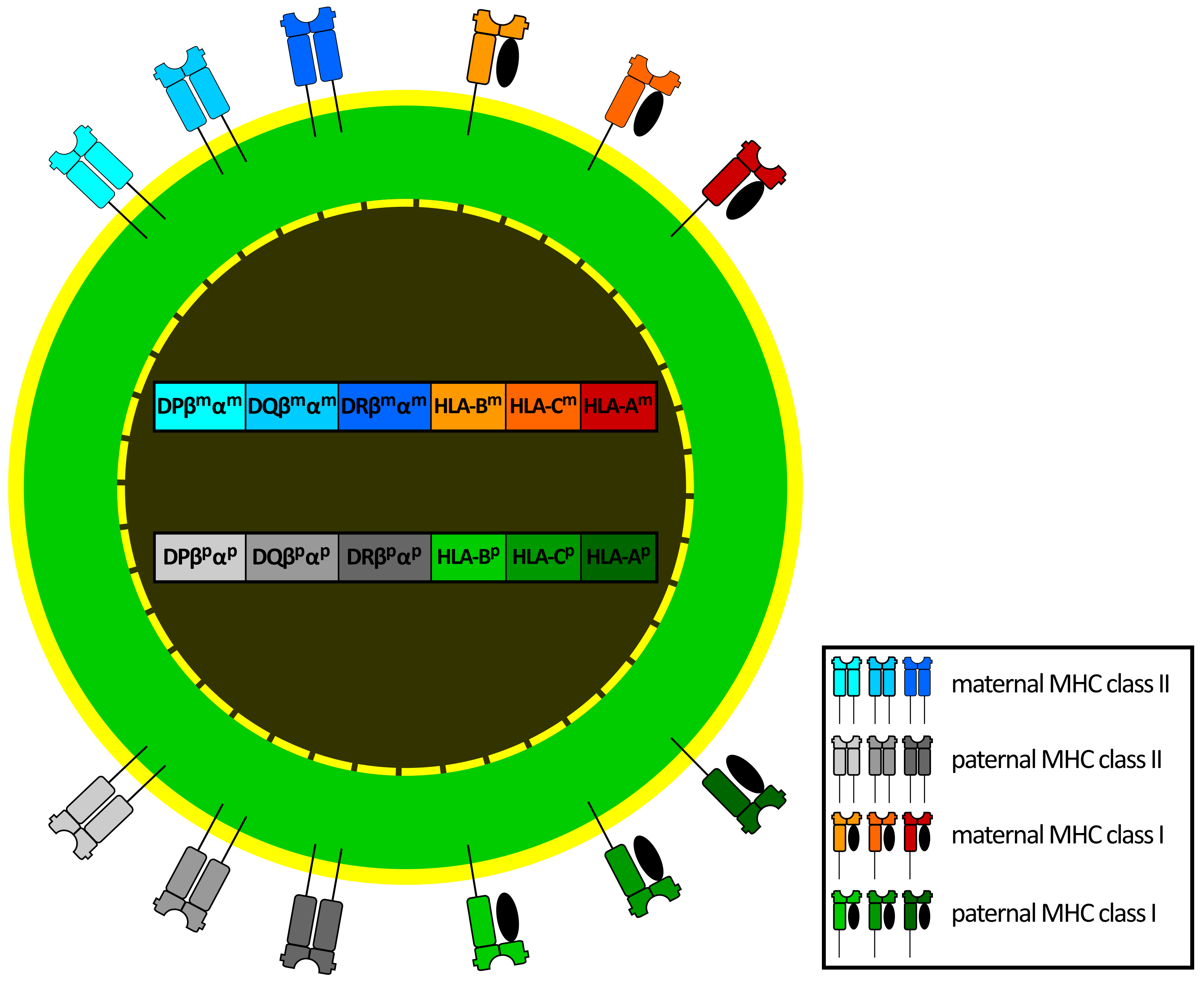
Figura 1. Expresión codominante de los genes HLA
Las proteínas MHC generalmente se dividen en tres "clases". Las proteínas de la clase I MHC se expresan en la mayoría de las células del cuerpo y nos ayudan a combatir las infecciones virales. Las proteínas de la clase I MHC incluyen las codificadas por HLA-A, HLA-B y HLA-C. Las proteínas de la clase II MHC se expresan en células inmunes como células B, células T auxiliares activadas, macrófagos y células dendríticas; estas células nos ayudan a combatir las infecciones bacterianas produciendo anticuerpos. La clase II MHC codifica HLA-DR, HLA-DQ y HLA-DP. También hay proteínas de la clase III MHC que apoyan a nuestras células inmunes.
La estructura de cada clase de proteínas es diferente: mientras que la clase II de MHC tiene 2 cadenas (cadena A y cadena B), la clase I de MHC solo tiene una sola cadena grande, unida a una macroglobulina. Por lo tanto, a veces se agrega un componente adicional para especificar la cadena cuando se nombran las proteínas de la clase II de MHC.
Nomenclatura y Tipificación HLA
La convención de nomenclatura HLA 2010 es la que se utiliza actualmente de manera generalizada para nombrar las proteínas MHC y los genes HLA que las codifican. La convención identifica el gen HLA, el grupo de alelos/allotipo, la proteína específica y cualquier sustitución/mutación. Cada uno de estos It has been found that couples with very different HLA types and differences in their MHC genes tend to have more fulfilling relationships, what we at DNA Romance like to call “romantic chemistry”, also known as genetic compatibility.
What is genetic compatibility?
Genetic compatibility refers to the match between the genes of two individuals, particularly with respect to their potential to have children together. Certain genetic combinations are more compatible and can result in healthier offspring.
One method is to test for genetic compatibility is the presence or absence of certain genetic markers, such as HLA (human leukocyte antigen) markers, which are involved in the immune system.
Individuals with more dissimilar HLA profiles may be more genetically compatible, as this could result in a child with a more diverse immune system.
Another way to evaluate genetic compatibility is through genetic testing for inherited disorders. Couples who are considering having children may choose to undergo genetic testing to determine their risk of passing on certain inherited disorders to their offspring. This can help them make informed decisions about their fertility options and the potential risks and benefits of having children together.
It is important to note that genetic compatibility is not the only factor that determines the health and well-being of a child. Other factors, such as the overall health and lifestyle of the parents, can also have a significant impact on the health of a child.
Let DNA Romance can help you find your genetic matches today!
OBTENGA UN INFORME DE COMPATIBILIDAD DE PAREJAS
Tome una prueba de personalidad gratuita