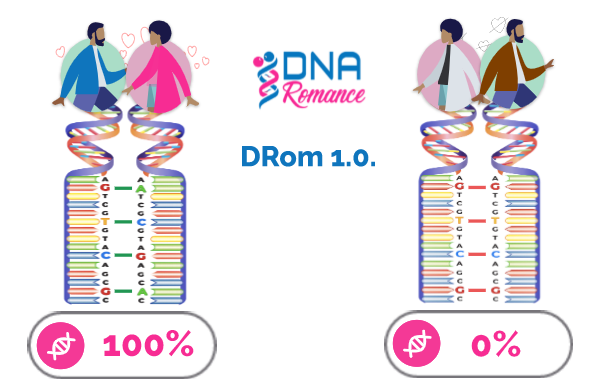
DNA Romance predicts "Chemistry" online using the DRom 1.0 algorithm. This algorithm assesses 100 specific markers within your DNA, focusing on genes proven to be involved in attraction and reproduction. Studies have shown that people with varied DNA markers in the Major Histocompatibility Complex (MHC) tend to find each other’s scent appealing and often enjoy more durable romantic relationships .
DNA Romance prévoit également compatibilité de la personnalité En utilisant des types de personnalité dérivés de tests psychométriques, et en permettant aux utilisateurs d'évaluer des intérêts communs partagés à l'aide de filtres, et attraction physique basé sur les photographies de leur match. DNA Romance's second genetic algorithm DRom 2.0 utilise un modèle d'IA entraîné avec des marqueurs ADN pertinents pour prédire le phénotypetraits avec une grande précision. DRom 2.0 complète DNA Romance mécanisme de vérification de profil, qui présente plusieurs couches de contrôles qui aident à mieux indiquer l'utilisateurl'authenticité du profil.
Explorer notre
Note de compatibilité de la personnalité
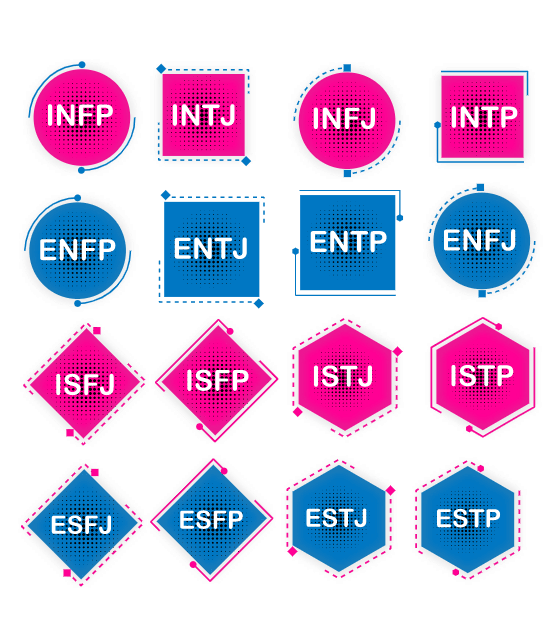
inspired by the renowned Jung/Myers-Briggs 16 personality types. Developed over a century ago by Swiss psychiatrist Dr. Carl Jung and further refined by Isabel Briggs Myers and Katherine Briggs, this psychometric test has stood the test of time. Recognized as the Myers-Briggs Type Indicator®, it's widely used in organizational psychology.
DNA Romance utilizes this personality compatibility algorithm to predict potential connections between both singles and couples. DNA Romance's algorithms strategically assigns higher compatibility scores to similar personality types, and lower scores to those that may conflict.
DNA Romance predicts "Chemistry" using DRom 1.0, an algorithm that analyses Single Nucleotide Polymorphisms (SNPs)confirmed to influence relationship choice in several independent studies. Here we present just a few of the research papers we evaluated in order to develop DRom 1.0 .
Jokiniemi A, Turunen T, Kohonen M et al. (2025) Female-mediated selective sperm activation may remodel major histocompatibility complex-based mate choice decisions in humans Heredity 134, 321–330.
*** This study reveals a paradox: women prefer the body odours of MHC-similar men, but sperm from MHC-dissimilar men exhibit higher motility when exposed to female follicular fluid. This suggests that the most attractive males may not necessarily be the most optimal partners in terms of fertilisation success, indicating that post-copulatory selection can remodel pre-mating mate choice decisions.
Havlíček J, Winternitz J, Roberts S (2020) Major histocompatibility complex-associated odour preferences and human mate choice: near and far horizons Philosophical Transactions of the Royal Society B, 375:20190260.
*** A comprehensive meta-analysis examining MHC-based mate choice in humans. The analysis found no significant overall effect of MHC-similarity on human mate selection when combining genomic studies, relationship satisfaction measures, and odour preference experiments. The authors recommend larger, more diverse samples and greater focus on mechanisms of MHC-associated pregnancy loss.
Dandine-Roulland C, Laurent R, Dall'Ara I, Toupance B et Chaix R (2019) Preuve génomique de l'accouplement disassortif du CMH chez l'homme
This study on major histocompatibility complex (MHC) and mate choice in humans suggests that while couples in Northern Europe tend to exhibit MHC-dissimilarity, potentially indicative of a biological influence on mate choice, social and/or cultural factors in other regions, like Israel, may override or obscure such biologically-driven mating preferences.
Birnbaum GE, Zholtack K, Mizrahi M & Ein-Dor T (2019) La pilule amère : l'arrêt des contraceptifs oraux renforce l'attrait de Copains alternatifs Evolutionary Psychological Science volume 5, pages 276–285
*** Les contraceptifs hormonaux modifient les préférences des femmes en matière de partenaires vers des hommes plus attentionnés, mais l'arrêt de leur utilisation fait revenir ces préférences, en augmentant l'attraction envers des hommes plus génétiquement compatibles, en particulier pendant les phases à haute fertilité, ce qui peut motiver la recherche de partenaires alternatifs.
Wedekind C (2019) A predicted interaction between odour pleasantness and intensity provides evidence for major histocompatibility complex social signalling in women Proc. R. Soc. B 285:20172714.
*** Le document décrit la relation entre le complexe majeur d'histocompatibilité (MHC) et les préférences olfactives chez les humains, en débattant des résultats antérieurs et en analysant comment le rasage des aisselles et d'autres facteurs peuvent influencer la perception de l'odeur corporelle et son lien avec le MHC, avec une réanalyse des données passées révélant que la plaisance et l'intensité des odeurs peuvent interagir avec la dissimilarité du MHC pour influencer le signal social par le parfum, impliquant une relation nuancée entre le MHC, la perception olfactive et la communication sociale.
Wu K, Chen C, Moyzis RK, Nuno M, Yu Z and Greenberger E (2018) More than skin deep: Major histocompatibility complex (MHC)-based attraction among Asian American speed-daters Evolution and Human Behavior. 39(4):447-456.
*** Dans un contexte de speed-dating, les femmes, mais pas les hommes, ont montré des préférences pour des partenaires basées sur la complémentarité du Complexe Majeur d'Histocompatibilité (MHC) par analyse SNP, avec différents SNPs influençant l'attraction de manière directionnelle en fonction de la proximité des gènes HLA majeurs, et les indices basés sur le MHC ont eu une influence comparable aux attributs de personnalité auto-déclarés pour prédire les offres de deuxième rendez-vous pour les deux sexes.
Henningsson S, Hovey D, Vass K, Walum H, Sandnabba K, Santtila P, Jern P, Westberg L (2017) A missense polymorphism in the putative pheromone receptor gene VN1R1 is associated with sociosexual behavior Transl Psychiatry. 7(4):e1102.
*** L'étude révèle une association significative entre un polymorphisme du gène VN1R1, lié au récepteur vomeronasal de type 1 humain (faisant partie du système qui médiatise les effets des phéromones), et le comportement sociosexuel chez les femmes, en particulier en ce qui concerne les relations d'une nuit, ce qui suggère que la chimiosignalisation pourrait jouer un rôle dans la modulation des interactions sociales humaines.
Burger D, Meuwly C, Marti E, Sieme H, Oberthür M, Janda J, Meinecke-Tillmann S et Wedekind C. (2017) Préférences corrélées à MHC chez les juments diestres (Equus caballus).
Cette étude a examiné l'influence des gènes du Complexe Majeur d'Histocompatibilité (MHC) et des niveaux de testostérone sur les préférences d'accouplement des juments, constatant que les juments manifestaient un intérêt accru pour les étalons dissimilaires au MHC pendant leur phase de diestrus (période non reproductive), mais d'autres caractéristiques masculines non liées au MHC, possiblement comme des attributs physiques ou des indices comportementaux, pouvaient contourner les influences du MHC pendant leur phase d'œstrus (phase reproductive), le contexte et la phase du cycle étant essentiels dans le choix du partenaire.
Sherlock JM, Sidari MJ, Harris EA, Barlow FK, Zietsch BP (2016) Testing the mate-choice hypothesis of the female orgasm: disentangling traits and behaviours Socioaffect Neurosci Psychol. 6:31562.
*** L'étude suggère que les femmes expérimentent des fréquences d'orgasme variées avec différents partenaires, ceux qui induisent des taux d'orgasme plus élevés étant perçus comme plus drôles, créatifs, chaleureux, fidèles et mieux sentants, et étant également plus attentifs à la satisfaction sexuelle de leur partenaire, ce qui soutient partiellement l'hypothèse du choix du partenaire de l'orgasme féminin qui le considère comme un mécanisme potentiel pour sélectionner des partenaires de haute qualité.
Kromer J, Hummel T, Pietrowski D, Giani AS, Sauter J, Ehninger G, Schmidt AH, Croy I (2016) Influence of HLA on human partnership and sexual satisfaction Sci Rep. 6:32550.
*** L'étude indique que chez les humains, la dissimilarité HLA (un composant génétique du système immunitaire) peut influencer le choix du partenaire et le degré de satisfaction sexuelle, potentiellement par la détection de signaux olfactifs liés à la compatibilité génétique, de manière similaire à des mécanismes observés chez d'autres animaux, favorisant la diversité génétique et la résistance aux pathogènes chez les descendants.
Wlodarski R. and Dunbar RIM. (2015) What's in a Kiss? The Effect of Romantic Kissing on Mate Desirability Evol Psychol. 12(1): 178–199.
*** Cette étude a révélé que la capacité perçue de baisers romantiques affecte les évaluations des partenaires potentiels, augmentant la désirabilité en particulier pour les femmes dans des contextes de sexe occasionnel. Bien que les indices visuels puissent annuler l'impact des informations liées au baiser dans certains scénarios de séduction, l'influence des informations visuelles attrayantes semble plus puissante pour les hommes que pour les femmes, faisant allusion au rôle multifacette des baisers pour transmettre la qualité et la désirabilité du partenaire avec d'autres indices.
Burger D, Dolivo G, Marti E, Sieme H et Wedekind C. (2015) Le type de complexe majeur d'histocompatibilité chez la femelle affecte les niveaux de testostérone et le nombre de spermatozoïdes chez le mâle cheval (Equus caballus)
Cette étude examine comment le complexe majeur d'histocompatibilité (MHC) influence les stratégies de reproduction des mâles chez les chevaux. La recherche a révélé que lorsque les étalons étaient exposés à des femelles ayant des types MHC différents, ils présentaient des niveaux de testostérone plus élevés et produisaient un plus grand nombre de spermatozoïdes par éjaculat par rapport à lorsqu'ils étaient exposés à des juments MHC-similaires, ce qui montre que les signaux liés au MHC peuvent effectivement influencer la production de testostérone et les caractéristiques du sperme, ce qui influence les approches de reproduction.
Christakis NA and Fowler JH (2014) Amitié et sélection naturelle PNAS. 11:10796–10801.
*** L'étude démontre que les humains ont tendance à former des amitiés avec des individus qui ont des génotypes similaires - à peu près au niveau de cousins au quatrième degré - sur l'ensemble du génome, et alors que certains génotypes sont positivement corrélés (homophiliques), d'autres sont négativement corrélés (hétérophiles) parmi les amis, avec des ensembles de gènes particuliers liés à l'olfaction et au système immunitaire jouant un rôle dans la formation des amitiés, proposant que les amis pourraient agir comme des «kin fonctionnels» et suggérant que les génotypes homophiles peuvent offrir des avantages synergiques pour la fitness qui ont influencé l'évolution humaine récente.
Laurent R and Chaix R (2012) MHC-dependent mate choice in humans: Why genomic patterns from the HapMap European American dataset support the hypothesis BioEssays. 34(4):267-71.
*** This study supports the hypothesis that humans tend to choose mates with different MHC (Major Histocompatibility Complex) genes than their own, which may promote genetic diversity and immune system strength in offspring.
Lie HC, Simmons LH and Rhodes G (2010) Genetic dissimilarity, genetic diversity, and mate preferences in humans Evolution and Human Behavior 31:8–58.
*** Cette étude explore l'influence des facteurs génétiques, en particulier le complexe majeur d'histocompatibilité (MHC), sur les préférences de partenaire chez les humains, découvrant que les mâles ont tendance à préférer des femelles dissemblables en MHC dans des contextes de reproduction à court et à long terme, tandis que la diversité génétique impacte les préférences des partenaires tant masculins que féminins à travers différents contextes de reproduction, soutenant ainsi un rôle significatif du MHC dans la sélection de partenaires chez les humains et suggérant que ces préférences pourraient fonctionner pour améliorer la diversité génétique chez la descendance.
Lie HC, Rhodes G and Simmons LH (2010) Is genetic diversity associated with mating success in humans? Animal Behaviour. 79, 4:903-909
*** Cette étude indique que chez les humains, en particulier les femmes, la diversité génétique, notamment au sein du complexe majeur d'histocompatibilité (MHC), est associée à un plus grand succès en matière de reproduction, mesuré par le nombre de partenaires sexuels, soutenant le concept selon lequel des facteurs génétiques, potentiellement liés au fonctionnement du système immunitaire, jouent un rôle dans le succès de la reproduction humaine, tandis qu'aucune association significative n'a été trouvée chez les hommes.
Chaix R, Cao C, and Donnelly P (2008) Is Mate Choice in Humans MHC-Dependent? PLOS Genetics, 4 (9)
*** L'étude indique que bien que les populations euro-américaines puissent préférer des partenaires dissemblables en MHC, choisissant la diversité dans les systèmes immunitaires de la descendance, un tel schéma n'est pas observé dans la population africaine examinée, suggérant que l'influence du MHC sur le choix du partenaire peut être dépendante du contexte et potentiellement façonnée par divers facteurs.
Schwensow N, Fietz J, Dausmann K, Sommer S (2008) MHC-associated mating strategies and the importance of overall genetic diversity in an obligate pair-living primate Evol Ecol. (22) 617-636
*** L'étude explore le choix du partenaire chez le lémurien nain à queue grasse, constatant que les femelles préfèrent les mâles avec une plus grande diversité génétique MHC et un chevauchement MHC plus faible en tant que pères sociaux et génétiques, tandis que l'hétérozygotie génétique globale et le lien de parenté n'influencent pas significativement la sélection des partenaires ; des accouplements extra-pair pourraient se produire pour atténuer l'incompatibilité génétique, mettant en évidence une interaction complexe entre les hypothèses de "bons gènes en tant qu'hétérozygotie" et de "mariage désassortatif" dans les stratégies d'accouplement des primates.
Wedekind C (2007) The Major Histocompatibility Complex and Perfumers' Descriptions of Human Body Odors Evolutionary Psychology.5(2): 330-343
*** Cet expérience révèle une connexion entre le Complexe Majeur d'Histocompatibilité (MHC) et les descriptions verbales des odeurs corporelles humaines, démontrant que les parfumeurs professionnels peuvent, dans une certaine mesure, articuler les composants des odeurs corporelles corrélés au MHC, soulignant l'influence du MHC sur la perception olfactive humaine et possiblement, le choix de partenaire, étant donné le rôle critique du MHC dans le fonctionnement du système immunitaire et son impact précédemment noté sur l'odeur corporelle et le choix de partenaire.
Garver-Apgar CE, Gangestad SW, Thornill R, Miller RD and Olp JJ (2006) Major histocompatibility complex alleles, sexual responsivity, and unfaithfulness in romantic couples Psychol Sci, 17(10): 830-835.
*** In the context of romantic couples, the study finds that as the proportion of shared Major Histocompatibility Complex (MHC) alleles increases, women's sexual responsivity to their partners decreases, while their number of extra-pair sexual partners and attraction to men other than their primary partners, especially during their fertile phase, increases, suggesting that MHC-dissimilarity might play a role in sexual attraction and partner selection, potentially driven by underlying genetic and reproductive strategies to enhance offspring immunocompetence by maintaining genetic diversity.
Roberts CE, Gosling LM, Carter V and Petrie M (2006) MHC-correlated odour preferences in humans and the use of oral contraceptives Proc. R. Soc. B 275, 2715–2722
*** This study investigates how oral contraceptives influence women's preferences for certain male odours, which are known to be influenced by genes in the Major Histocompatibility Complex (MHC). Previous research has indicated that female preference for MHC-dissimilar male odour may function to increase offspring heterozygosity or minimize inbreeding. Interestingly, it has also been suggested that women using oral contraceptives tend to prefer the scent of MHC-similar males, which runs contrary to this logic. The study utilized a longitudinal design to test women before and after initiating contraceptive pill use, comparing their preferences to a control group of non-pill users. While the study didn't find a significant difference in ratings between odours of MHC-dissimilar and MHC-similar men during the follicular cycle phase in general, it did unearth that single women tended to prefer the odour of MHC-similar men, whereas women in relationships leaned towards the odour of MHC-dissimilar men. This latter finding aligns.
Wedekind C (2006) The Intensity of Human Body Odors and the MHC: Should We Expect A Link? Evolutionary Psychology. 4:85-94
*** Cette recherche discerne les relations entre quelques gènes MHC (Complexe Majeur d'Histocompatibilité) et l'intensité ainsi que la douceur des odeurs corporelles des hommes, découvrant que les hommes ayant au moins un antigène MHC homozygote n'émettent pas des odeurs notablement plus intenses que les hétérozygotes, pourtant leurs senteurs sont perçues comme significativement plus fortes par les femmes ayant un MHC dissemblable.
Pause BM, Krauel K, Schrader C, Sojka B, Westphal E, Müller-Ruchholtz W, and Ferstl R. (2006) The human brain is a detector of chemosensorily transmitted HLA-class I-similarity in same- and opposite-sex relations Proc. R. Soc. B (2006) 273, 471–478 doi:10.1098/rspb.2005.3342
*** This study reveals that humans subconsciously detect and respond to body odors from individuals with similar HLA (Human Leucocyte Antigen) genetic markers, which might play a critical role in social interactions and mate selection by acting as subtle social signals within both same-sex and opposite-sex relationships.
Martins Y, Preti G, Crabtree CR, Runyan T, Vainius AA and Wysocki CJ (2005) Preference for Human Body Odors Is Influenced by Gender and Sexual Orientation Psychological Science, 16(9) 694-702
*** Cette étude démontre que l'orientation sexuelle et le genre influencent les préférences des individus pour les odeurs corporelles humaines, les hommes et les femmes hétérosexuels et homosexuels présentant des préférences distinctes à deux choix lorsqu'ils sont confrontés à des odeurs corporelles d'individus de différentes combinaisons de genre et d'orientation sexuelle, ce qui implique que l'odeur corporelle peut être un facteur dans la sélection de partenaires sexuels et sociaux.
Horton R, Wilming L, Rand V, Lovering RC, Bruford EA, Khodiyar VK, Lush MJ, Povey S, Talbot CC Jr, Wright MW, Wain HM, Trowsdale J, Ziegler A, Beck S (2004) Gene map of the extended human MHC. Nat Rev Genet 5(12):889-899
*** This study characterises an integrated gene map of the extended human MHC, a pivotal region in the vertebrate genome for infection and autoimmunity due to its essential role in both adaptive and innate immunity, highlighting its significant content related to paralogy, polymorphism, immune functionality, and its association with various diseases, providing a comprehensive view stemming from the assimilation of data from several large-scale studies.
Jacob S, McClitock MK, Zelano B and Ober C (2002) Paternally inherited HLA alleles are associated with woman's choice of male odour Nature Genetics, 30:175
*** This study demonstrates that women can discern differences in male body odor influenced by a single variance in HLA (human MHC) allele, with a woman's capacity to distinguish and prefer certain odors notably being based on HLA alleles inherited from her father and not her mother; this suggests that paternally inherited HLA-associated odors influence odor preference and might function as social cues, even despite a milieu of potential odors derived from a variety of genetic and cultural factors.
Milinski M and Wedekind C (2001) Evidence for MHC-correlated perfume preference in humans Behavioural Ecology 12(2):140-149
*** L'étude explore la relation entre les génotypes du Complexe Majeur d'Histocompatibilité (MHC) et les préférences en matière de parfum chez les humains. Ils ont découvert une corrélation notable entre le MHC d'un individu (spécifiquement HLA-A, -B, -DR) et ses évaluations de diverses senteurs pour un usage personnel, certains types HLA (par exemple, HLA-A2) montrant des préférences de senteur cohérentes. Cependant, en ce qui concerne les préférences pour la senteur d'un partenaire, la corrélation était largement insignifiante, s'alignant avec l'hypothèse selon laquelle les individus choisissent des parfums pour un usage personnel afin de potentiellement améliorer ou amplifier leurs propres odeurs corporelles immunogénétiques révélatrices, plutôt que de modifier les senteurs perçues de leurs partenaires.
Wedekind C, Seebeck T, Bettens F And Paepke AJ (1995) MHC-dependent mate preferences in humans. Proc.R.Soc.Lond.B. 260:245-249.
*** Cette étude a révélé que les gens ont tendance à préférer les odeurs corporelles des partenaires potentiels qui ont des gènes du système immunitaire différents des leurs, mais cette préférence change pour les femmes sous contraception.
MHC similarity between couples is known to cause issues with family planning, here are some of the peer-reviewed papers describing the role of MHC similarity and human reproduction .
* demonstrated increased rates of recurrent spontaneous abortion among Hutterite couples matching for HLA-DQA1 alleles
Ober., Steck., Ven., Billstrand., Messer., Kwak., Beaman., Beer (1993) MHC class II compatibility in aborted fetuses and term infants of couples with recurrent spontaneous abortion Journal of Reproductive Immunology, Volume 25, Issue 3, December 1993, Pages 195-207
* results of a 10 year study that demonstrated increased fetal loss rates among Hutterite couples matching for HLA antigens.
Ober C, Hyslop T, Elias S, Weitkamp LR, Hauck WW (1998) Human leukocyte antigen matching and fetal loss: results of a 10 year prospective study Human Reproduction, Volume 13, Issue 1, Jan 1998, Pages 33–38
* describe the relationship between HLA similarity at individual alleles, as well as HLA haplotypes as indicators for increased risk of fetal loss among Hutterite couples.
Ober C (1999) Studies of HLA, fertility and mate choice in a human isolate Hum Reprod Update 5(2):103-107.
* identified differential association of alleles in HLA-A, HLA-B, HLA-C, and HLA-DRB1 when compared with reported world RSA patients.
Shankarkumar U, Pawar A, Gaonkar P, Parasannavar D, Salvi V, and Ghosh K (2008) HLA allele associations in idiopathic recurrent spontaneous abortion patients from India J Hum Reprod Sci. 2008 Jan;1(1):19-24.
* found an increased frequency of homozygosity for HLA-E*0101 in Egyptian women with RM
Mosaad YM, Abdel-Dayem Y, El-Deek BS and El-Sherbini SM (2011) Association between HLA-E *0101 homozygosity and recurrent miscarriage in Egyptian women Scand J Immunol. 2011 Aug;74(2):205-9.
* performed a meta-analyses of 41 studies and showed that HLA-B sharing and HLA-DR sharing were both associated with the occurrence of RM.
Meuleman T, Lashley LE, Dekkers OM, van Lith J, Claas FH and Bloemenkamp KW (2015) HLA associations and HLA sharing in recurrent miscarriage: A systematic review and meta-analysis Hum Immunol. May;76(5):362-73.
* proposed a genetic-risk calculation that could predict recurrent miscarriage (RM) based on analysing HLA haplotypes from couples either with histories of successful pregnancies or RM.
Mora-Sánchez A, Aguilar-Salvador D, Nowak I (2019) Towards a gamete matching platform: using immunogenetics and artificial intelligence to predict recurrent miscarriage NPJ Digit Med Mar 7;2:12.
* found that sperm viability was associated with partners' HLA dissimilarity, indicating that cervical mucus may selectively facilitate later gamete fusion between immunogenetically compatible partners.
Jokiniemi A, Magris M, Ritari J, Kuusipalo L, Lundgren T, Partanen J and Kekäläinen J (2020) Post-copulatory genetic matchmaking: HLA-dependent effects of cervical mucus on human sperm function Proc Biol Sci., doi: 10.1098/rspb.2020.1682.
* demonstrated that HLA eplet dissimilarity positively affects sperm viability in follicular fluid, providing evidence that cryptic female choice operates at the gamete level to favour immunologically compatible partners.
Magris M, Jokiniemi A, Kuusipalo L, Ritari J, Koskela S, Partanen J and Kekäläinen J (2021) Structural dissimilarity of partners' immune genes increases sperm viability in women's reproductive tract Journal of Evolutionary Biology, 34(7):1125-1134.
* demonstrated that soluble HLA-G secreted by embryos into IVF culture medium correlates with implantation success and pregnancy rates, confirming the importance of HLA molecules in early pregnancy.
Lédée N, Petitbarat M, Chevrier L, et al. (2022) The impact of soluble HLA-G in IVF/ICSI embryo culture medium on implantation success Front Immunol. 13:982518.
* found that over 70% of couples with recurrent miscarriages or IVF failures showed high HLA-DQA1 allele similarity, supporting the role of HLA compatibility in reproductive outcomes.
Pafilis I, Michou V, Tsilivakos V, et al. (2023) Human Leukocyte Antigen Alleles Compatibility and Immunophenotypic Profile Associations in Infertile Couples Int J Mol Sci. 24(6):5350.
* found that primary infertile couples (N=609) share more HLA alleles than expected by chance, suggesting HLA similarity may contribute to unexplained infertility and IVF failure.
Kolańska K, Grześ S, Łukaszuk K, et al. (2025) Primary infertile couples share more HLA alleles than expected by chance European Journal of Obstetrics & Gynecology and Reproductive Biology.
MHC-based mate choice is not unique to humans—it is an evolutionarily conserved mechanism found across all vertebrate species studied. Research in fish, birds, rodents, primates, and horses demonstrates that MHC genes influence partner selection, reproductive success, and offspring fitness throughout the animal kingdom. This conservation across 450 million years of vertebrate evolution underscores the fundamental biological importance of MHC compatibility in reproduction.
* Landmark study demonstrating that house mice prefer mates with dissimilar MHC genotypes. Mice detect MHC differences through urine odor cues, and MHC-disassortative mating preferences result in a 27% deficit of MHC homozygous offspring in wild populations.
Penn DJ and Potts WK (1999) The evolution of mating preferences and major histocompatibility complex genes The American Naturalist, 153(2):145-164.
* Demonstrated that female three-spined sticklebacks (Gasterosteus aculeatus) use odor-based MHC detection to select mates that will produce offspring with optimal MHC diversity, equipping them with maximal resistance to pathogens and parasites.
Milinski M, Griffiths S, Wegner KM, Reusch TBH, Haas-Assenbaum A, Boehm T (2005) Mate choice decisions of stickleback females predictably modified by MHC peptide ligands PNAS, 102(12):4414-4418.
* Found that both male and female sticklebacks with intermediate MHC class IIB diversity had the highest lifetime reproductive success, demonstrating that optimal (not maximal) MHC diversity maximizes fitness.
Kalbe M, Eizaguirre C, Dankert I, Reusch TBH, Sommerfeld RD, Wegner KM, Milinski M (2009) Lifetime reproductive success is maximized with optimal major histocompatibility complex diversity Proceedings of the Royal Society B, 276(1658):925-934.
* In the grey partridge, females preferentially paired with males having more dissimilar MHC, with lower numbers of shared amino acid variants. This supports the 'inbreeding avoidance' and 'complementary genes' hypotheses in a strictly monogamous bird species.
Løvlie H, Gillingham MAF, Worley K, Pizzari T, Richardson DS (2017) Mate choice for major histocompatibility complex complementarity in a strictly monogamous bird, the grey partridge (Perdix perdix) Frontiers in Zoology, 14:9.
* Wild-spawning Atlantic salmon that chose their own mates produced offspring with 4× lower parasite loads than artificially crossed salmon, despite similar MHC diversity—demonstrating that MHC-mediated mate choice directly increases offspring fitness.
Consuegra S, de Leaniz CG (2008) MHC-mediated mate choice increases parasite resistance in salmon Proceedings of the Royal Society B, 275(1641):1397-1403.
* Discovered that MHC peptides trigger olfactory imprinting in zebrafish during a critical developmental period, creating persistent kin recognition preferences—demonstrating a fundamental mechanism by which vertebrates learn to recognize MHC-similar individuals.
Gerlach G, Hodgins-Davis A, Avolio C, Schunter C (2013) Olfactory imprinting is triggered by MHC peptide ligands Scientific Reports, 3:2800.
* Found non-random mating based on MHC in Chinook salmon—females directed more aggression toward MHC-similar males than MHC-dissimilar males, providing behavioral evidence for active mate discrimination based on immune genes.
Neff BD, Garner SR, Heath JW, Heath DD (2008) The MHC and non-random mating in a captive population of Chinook salmon Heredity, 101:175-185.
* In a study of 191 mares, females were significantly more likely to become pregnant when exposed to MHC-dissimilar stallions (p=0.019), demonstrating "cryptic female choice" influenced by MHC social signalling in horses.
Burger D, Meuwly C, Marti E, Sieme H, Oberthür M, Janda J, Meinecke-Tillmann S, Wedekind C (2017) MHC-linked social signalling affects female fertility in horses Proceedings of the Royal Society B, 284:20161998.
* Found that stallions exposed to MHC-dissimilar mares exhibited 19.2%% higher testosterone levels and produced more sperm per ejaculate, demonstrating that MHC-linked signals directly affect male reproductive strategies.
Burger D, Dolivo G, Marti E, Sieme H, Wedekind C (2015) Le type de complexe majeur d'histocompatibilité chez la femelle affecte les niveaux de testostérone et le nombre de spermatozoïdes chez le mâle cheval (Equus caballus) Proceedings of the Royal Society B, 282:20150407.
* Meta-analysis of 58 effect sizes from 30 studies across seven primate species found a significant trend favouring MHC-diverse mates. The analysis confirms MHC-based mate preferences operate across the primate lineage.
Winternitz J, Abbate JL, Huchard E, Havlíček J, Garamszegi LZ (2017) Patterns of MHC-dependent mate selection in humans and nonhuman primates: a meta-analysis Molecular Ecology, 26(2):668-688.
* In wild grey mouse lemurs from Madagascar, found evidence for post-copulatory mate choice associated with MHC constitution—fathers had higher numbers of MHC supertypes different from mothers than randomly assigned males.
Schwensow N, Eberle M, Sommer S (2008) Compatibility counts: MHC-associated mate choice in a wild promiscuous primate Proceedings of the Royal Society B, 275(1634):555-564.
* Building on Burger's work, found that stallion semen quality depends on MHC matching to teaser mares—semen collected in the presence of MHC-dissimilar mares had higher sperm concentration and better motility.
Jeannerat E, Marti E, Berney C, Janett F, Bollwein H, Sieme H, Burger D, Wedekind C (2018) Stallion semen quality depends on major histocompatibility complex matching to teaser mare Molecular Ecology, 27(4):1025-1035.
* First evidence for MHC-based mate choice in reptiles: female Chinese alligators preferentially mate with MHC-heterozygous males that are genetically compatible, extending MHC mate choice to crocodilians.
Wang H, Shen FJ, Min MS, Wu XB, Yue BS, Yan P (2018) MHC class I diversity predicts non-random mating in Chinese alligators (Alligator sinensis) Heredity, 122:809-818.
* Found evidence for MHC-disassortative mating in the tuatara, a "living fossil" reptile—demonstrating that MHC-based mate choice has been conserved since the Triassic period (>200 million years ago).
Miller HC, Moore JA, Nelson NJ, Daugherty CH (2009) Influence of major histocompatibility complex genotype on mating success in a free-ranging reptile population Proceedings of the Royal Society B, 276(1662):1695-1704.
* In Seychelles warblers, when females' social mates were MHC-similar, they were more likely to engage in extra-pair copulations, with extra-pair males being significantly more MHC-dissimilar than social mates.
Richardson DS, Komdeur J, Burke T, von Schantz T (2005) MHC-based patterns of social and extra-pair mate choice in the Seychelles warbler Proceedings of the Royal Society B, 272(1564):759-767.
* Demonstrated that MHC-based mate choice in sticklebacks can drive ecological speciation, showing that immunogenes not only influence individual fitness but can shape evolutionary divergence between populations.
Eizaguirre C, Lenz TL, Kalbe M, Milinski M (2018) Mate choice in sticklebacks reveals that immunogenes can drive ecological speciation Behavioral Ecology, 28(4):953-961.
* Found in ring-necked pheasants that male spur length (a sexually selected ornament) was correlated with MHC genotype, demonstrating that sexual ornaments can signal genetic quality at immune genes.
von Schantz T, Wittzell H, Goransson G, Grahn M, Persson K (1996) MHC genotype and male ornamentation: genetic evidence for the Hamilton-Zuk model Proceedings of the Royal Society B, 263(1368):265-271.
* Quantitative review of MHC-based mating preferences across 50+ vertebrate species found significant effects for both MHC diversity and dissimilarity preferences, confirming MHC-mediated mate choice as a widespread vertebrate phenomenon.
Kamiya T, O'Dwyer K, Westerdahl H, Senior A, Nakagawa S (2014) A quantitative review of MHC-based mating preference: the role of diversity and dissimilarity Molecular Ecology, 23(21):5151-5163.
* Demonstrated MHC-based mate choice in sand lizards—females preferred MHC-dissimilar males, showing that reptiles can recognize both their own genotype and that of potential partners through scent cues.
Olsson M, Madsen T, Nordby J, Wapstra E, Ujvari B, Wittsell H (2003) Major histocompatibility complex and mate choice in sand lizards Proceedings of the Royal Society B, 270(Suppl 2):S254-S256.
* Found that frog tadpoles use MHC-based self-referent cues to preferentially associate with MHC-similar kin—demonstrating that MHC recognition operates in amphibians from early developmental stages.
Villinger J, Waldman B (2008) Self-referent MHC type matching in frog tadpoles Proceedings of the Royal Society B, 275(1640):1225-1230.
* Found that MHC-divergent male tiger salamanders had reduced mating success compared to males with intermediate MHC divergence—supporting the optimal MHC diversity hypothesis in amphibians.
Bos DH, Williams RN, Gopurenko D, Bulut Z, DeWoody JA (2009) Condition-dependent mate choice and a reproductive disadvantage for MHC-divergent male tiger salamanders Molecular Ecology, 18(15):3307-3315.
* Comprehensive review of MHC odor signaling mechanisms across vertebrates—synthesizes decades of research on how fish, mice, horses, and humans detect MHC differences through olfactory cues.
Milinski M (2022) A Review of Suggested Mechanisms of MHC Odor Signaling Biology, 11(8):1187.
Our personality compatibility rating is based on the Myers-Briggs 16 personality types. This test has a long history with the development of the first 3 components dating back almost 100 years to Dr. Carl Jung and today the 4 letters and 16 personality type groups are widely known to the majority of people. DNA Romance's personality compatibility algorithm, called PC1, puts maximum weight on similar personality types and less weight towards personality types that tend to clash.
Lok C (2012) Career development: What's your type? Nature, 488: 545-547
* The article highlights the utilization of the Myers-Briggs Type Indicator and similar personality tests in assisting scientists to enhance their soft skills and navigate their careers by providing insights into their personality traits, which can inform their communication, leadership, and teamwork strategies within professional environments.
Keirsey, D (2006) Please Understand Me II (3rd ed) Promethius Nemesis Book Co., Del Mar, CA.
Comprenez-moi est un livre de psychologie écrit par David Keirsey et Marilyn Bates qui utilise un questionnaire auto-évalué, le Keirsey Temperament Sorter, pour catégoriser les individus en un des seize types de personnalité et quatre types de tempérament plus larges (Artisan, Guardian, Rational et Idealist), offrant aux lecteurs des aperçus sur leurs modèles de comportement et leurs valeurs fondamentales, tout en s'appuyant et en simplifiant les théories psychologiques et les indicateurs de type précédents, notamment le Myers-Briggs Type Indicator.
Myers IB, McCaulley MH, Quenk NL and Hammer AL (1998) MBTI manual: A guide to the development and use of the Myers-Briggs Type Indicator Consulting Psychologists Press, Palo Alto, CA, Vol. 3.
Le Manuel MBTI®, troisième édition, sert de guide complet, détaillant le développement, l'application et l'interprétation de l'instrument Myers-Briggs Type Indicator® , fournissant des informations approfondies sur la théorie, la fiabilité et la validité de l'outil et offrant des insights sur les 16 types de personnalité qu'il identifie, tous rédigés par des experts de premier plan en type psychologique, Isabel Briggs Myers, Mary H. McCaulley, Naomi L. Quenk et Allen L. Hammer.
Myers IB, McCaulley MH and Most R (1985) Manual, a guide to the development and use of the Myers-Briggs type indicator Consulting Psychologists Press.
The 1985 edition, 'Manual: A Guide to the Development and Use of the Myers-Briggs Type Indicator,' introduces and elucidates the Myers-Briggs Type Indicator (MBTI®), designed to render C. G. Jung's psychological type theory comprehensible and applicable in daily life, underlining the principle that behavioral variations, while seemingly sporadic, are consistently orderly, deriving from intrinsic differences in individuals' preferred use of perception and judgment.
Myers IB (1962) Manual, a guide to the development and use of the Myers-Briggs type indicator. Consulting Psychologists Press.
The 1962 manual for the Myers-Briggs Type Indicator provides comprehensive insights and guidelines for implementing C. Jung's theory of psychological types, asserting that behavioral variations are systematic and consistent due to basic perceptual and judgmental preferences, aiming to leverage these preferences through self-reports to ascertain individual psychological types, thereby enabling the practical application and research into their effects on reactions, motivations, values, and capabilities.
Jung CG (1923) Psychological types: or the psychology of individuation Oxford, England: Harcourt, Brace.
Types psychologiques de Carl Gustav Jung, publié pour la première fois en 1923, introduit la théorie psychologique fondamentale de typologie, présentant un cadre qui cherche à expliquer les différences diverses et apparemment aléatoires de la personnalité par une théorie systématique et ordonnée, proposant que les variations fondamentales du comportement humain résultent des différences inhérentes dans la façon dont les individus préfèrent utiliser leurs fonctions cognitives de perception et de jugement, posant les bases pour de nombreuses théories et évaluations de la personnalité à venir, notamment l'Indicateur de type Myers-Briggs (MBTI).