La scienza dietro la compatibilità nelle relazioni.


DNA Romance predicts "Chemistry" online using the DRom 1.0 algorithm. This algorithm assesses 100 specific markers within your DNA, focusing on genes proven to be involved in attraction and reproduction. Studies have shown that people with varied DNA markers in the Major Histocompatibility Complex (MHC) tend to find each other’s scent appealing and often enjoy more durable romantic relationships .

'DRom 1.0 Prevede Chimica e Parenti di Incompatibilità'
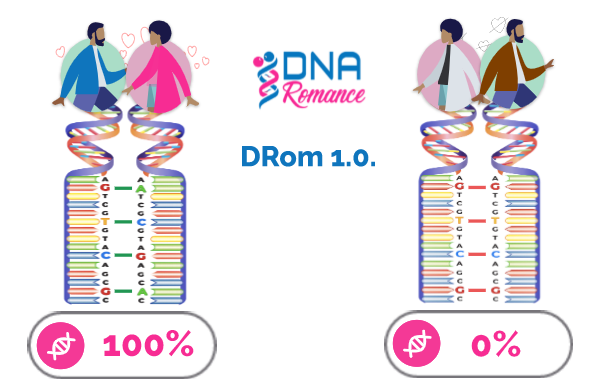
DNA Rmance DRom1.0 Predicts Chemistry


DNA Romance también pronostica compatibilità della personalità Utilizzando tipi di personalità derivati ​​da test psicometrici, e consente agli utenti di valutare. 'interessi comuni condivisi utilizzando filtri' 'e'. attrazione fisica Basato sulle fotografie della loro partita. DNA Romance. second genetic algorithm DRom 2.0 Utilizza un modello di intelligenza artificiale addestrato con marcatori DNA rilevanti per prevedere con elevata precisione i tratti fenotipici. DRom 2.0 integra DNA Romance's. meccanismo di verifica del profilo che presenta molteplici livelli di controlli che aiutano a indicare meglio l'autenticità del profilo utente.


Valutazione di compatibilità della personalità.

Come interagiscono i diversi tipi di personalità nelle relazioni.

Esplora il nostro valutazione della compatibilità della personalità inspired by the renowned Jung/Myers-Briggs 16 personality types. Developed over a century ago by Swiss psychiatrist Dr. Carl Jung and further refined by Isabel Briggs Myers and Katherine Briggs, this psychometric test has stood the test of time. Recognized as the Myers-Briggs Type Indicator®, it's widely used in organizational psychology.
DNA Romance utilizes this personality compatibility algorithm to predict potential connections between both singles and couples. DNA Romance's algorithms strategically assigns higher compatibility scores to similar personality types, and lower scores to those that may conflict.
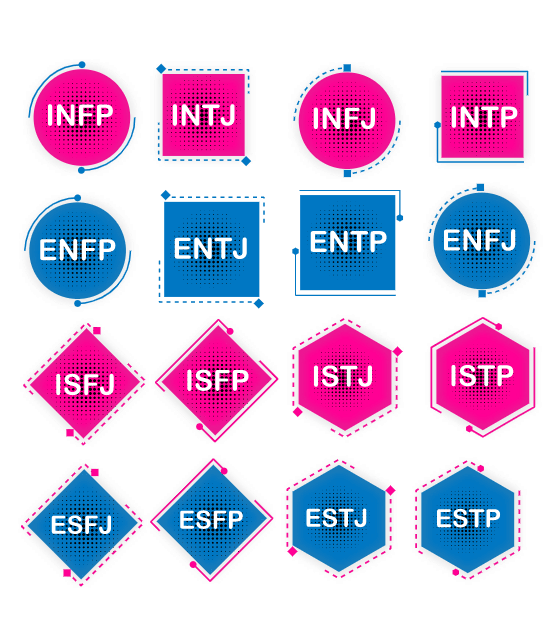
DNA Romance personality compatibility score

'Articoli di ricerca chiave'

DNA online dating site

Attrazione basata sul MHC (aka Chimica) e Scelta della Relazione.

DNA Romance predicts "Chemistry" using DRom 1.0, an algorithm that analyses Single Nucleotide Polymorphisms (SNPs)confirmed to influence relationship choice in several independent studies. Here we present just a few of the research papers we evaluated in order to develop DRom 1.0 .

Jokiniemi A, Turunen T, Kohonen M et al. (2025) Female-mediated selective sperm activation may remodel major histocompatibility complex-based mate choice decisions in humans Heredity 134, 321–330.

*** This study reveals a paradox: women prefer the body odours of MHC-similar men, but sperm from MHC-dissimilar men exhibit higher motility when exposed to female follicular fluid. This suggests that the most attractive males may not necessarily be the most optimal partners in terms of fertilisation success, indicating that post-copulatory selection can remodel pre-mating mate choice decisions.

Havlíček J, Winternitz J, Roberts S (2020) Major histocompatibility complex-associated odour preferences and human mate choice: near and far horizons Philosophical Transactions of the Royal Society B, 375:20190260.

*** A comprehensive meta-analysis examining MHC-based mate choice in humans. The analysis found no significant overall effect of MHC-similarity on human mate selection when combining genomic studies, relationship satisfaction measures, and odour preference experiments. The authors recommend larger, more diverse samples and greater focus on mechanisms of MHC-associated pregnancy loss.

Dandine-Roulland C, Laurent R, Dall'Ara I, Toupance B e Chaix R (2019) Evidenza genomica per l'accoppiamento disassortativo del MHC negli esseri umani.

This study on major histocompatibility complex (MHC) and mate choice in humans suggests that while couples in Northern Europe tend to exhibit MHC-dissimilarity, potentially indicative of a biological influence on mate choice, social and/or cultural factors in other regions, like Israel, may override or obscure such biologically-driven mating preferences.

Birnbaum GE, Zholtack K, Mizrahi M & Ein-Dor T (2019) La pillola amara: la cessazione dei contraccettivi orali aumenta l'attrattiva di compagni alternativi. Evolutionary Psychological Science volume 5, pages 276–285

*** I contraccettivi ormonali alterano le preferenze delle donne per i compagni verso uomini più premurosi, ma smettere di usarli riporta queste preferenze, aumentando l'attrazione verso uomini più geneticamente compatibili, specialmente durante le fasi di alta fertilità, potenzialmente motivando la ricerca di compagni alternativi.

Wedekind C (2019) A predicted interaction between odour pleasantness and intensity provides evidence for major histocompatibility complex social signalling in women Proc. R. Soc. B 285:20172714.

*** Il documento descrive la connessione tra il Complesso Maggiore di Istocompatibilità (MHC) e le preferenze olfattive negli esseri umani, dibattendo le precedenti scoperte e analizzando come la rasatura delle ascelle e altri fattori possano influenzare la percezione dell'odore corporeo e il suo legame con il MHC, con una rianalisi dei dati passati che rivela come la piacevolezza e l'intensità dell'odore possano interagire con la dissimilarità del MHC nell'influenzare la segnalazione sociale attraverso il profumo, implicando una relazione sfumata tra MHC, percezione dell'odore e comunicazione sociale.

Wu K, Chen C, Moyzis RK, Nuno M, Yu Z and Greenberger E (2018) More than skin deep: Major histocompatibility complex (MHC)-based attraction among Asian American speed-daters Evolution and Human Behavior. 39(4):447-456.

*** In un contesto di speed-dating, le donne, ma non gli uomini, hanno mostrato preferenze per i partner basate sulla complementarietà del Complesso Maggiore di Istocompatibilità (MHC) attraverso l'analisi degli SNP, con diversi SNP che influenzano l'attrazione in modo direzionale in base alla vicinanza ai geni HLA principali, e gli indici basati sull'MHC hanno avuto un'influenza comparabile agli attributi di personalità autodichiarati nella previsione delle offerte per un secondo appuntamento per entrambi i generi.

Henningsson S, Hovey D, Vass K, Walum H, Sandnabba K, Santtila P, Jern P, Westberg L (2017) A missense polymorphism in the putative pheromone receptor gene VN1R1 is associated with sociosexual behavior Transl Psychiatry. 7(4):e1102.

*** Lo studio trova una significativa associazione tra un polimorfismo nel gene VN1R1, correlato al recettore umano vomeronasale di tipo 1 (parte del sistema che media gli effetti delle feromoni), e il comportamento socio-sessuale nelle donne, in particolare riguardo agli incontri di una notte, suggerendo che il chemosignaling potrebbe svolgere un ruolo nella modulazione delle interazioni sociali umane.

Burger D, Meuwly C, Marti E, Sieme H, Oberthür M, Janda J, Meinecke-Tillmann S e Wedekind C. (2017) Preferenze correlate al MHC nelle cavalle in diestro (Equus caballus).

Questo studio ha investigato l'influenza dei geni del Complesso Maggiore di Istocompatibilità (MHC) e dei livelli di testosterone sulle preferenze di accoppiamento delle cavalle, scoprendo che le fattrici mostravano un interesse elevato verso i stalloni dissimili per MHC durante la loro fase diestrale (periodo non riproduttivo), ma altre caratteristiche maschili non collegate al MHC, possibilmente come attributi fisici o segnali comportamentali, potrebbero sovrascrivere le influenze del MHC durante la loro fase estrale (riproduttiva), con il contesto e la fase del ciclo che risultano fondamentali nella scelta del partner.

Sherlock JM, Sidari MJ, Harris EA, Barlow FK, Zietsch BP (2016) Testing the mate-choice hypothesis of the female orgasm: disentangling traits and behaviours Socioaffect Neurosci Psychol. 6:31562.

*** Lo studio suggerisce che le donne sperimentino frequenze orgasmiche variabili con diversi partner, con quelli che inducono tassi di orgasmo più elevati che vengono percepiti come più umoristici, creativi, calorosi, fedeli e di migliore odore, e che siano anche più attenti alla soddisfazione sessuale del loro partner, supportando parzialmente l'ipotesi della scelta del compagno dell'orgasmo femminile che lo considera come un potenziale meccanismo per selezionare compagni di alta qualità.

Kromer J, Hummel T, Pietrowski D, Giani AS, Sauter J, Ehninger G, Schmidt AH, Croy I (2016) Influence of HLA on human partnership and sexual satisfaction Sci Rep. 6:32550.

*** Lo studio indica che negli esseri umani, la dissimilitudine di HLA (un componente genetico del sistema immunitario) può influenzare la selezione del partner e la soddisfazione sessuale, potenzialmente attraverso la rilevazione di segnali olfattivi legati alla compatibilità genetica, in modo simile ai meccanismi osservati in altri animali, promuovendo la diversità genetica e la resistenza contro i patogeni nella prole.

Wlodarski R. and Dunbar RIM. (2015) What's in a Kiss? The Effect of Romantic Kissing on Mate Desirability Evol Psychol. 12(1): 178–199.

*** Questo studio ha scoperto che la percezione della capacità di baciare romanticamente influisce sulle valutazioni dei potenziali compagni, aumentando la desiderabilità soprattutto per le donne in contesti di sesso occasionale, e mentre i segnali visivi possono annullare l'impatto delle informazioni legate al bacio in determinati scenari di accoppiamento, l'influenza di informazioni visive attraenti sembra essere più potente per gli uomini che per le donne, suggerendo il ruolo poliedrico del bacio nel trasmettere la qualità e la desiderabilità del compagno insieme ad altri segnali.

Burger D, Dolivo G, Marti E, Sieme H e Wedekind C. (2015) Il tipo di complesso maggiore di istocompatibilità femminile influisce sui livelli di testosterone maschile e sul numero di spermatozoi nel cavallo (Equus caballus).

Questo studio esamina come il Complesso Maggiore di Istocompatibilità (MHC) influenzi le strategie riproduttive maschili nei cavalli. La ricerca ha rivelato che quando gli stalloni venivano esposti a femmine con tipi di MHC diversi, mostravano livelli più elevati di testosterone e producevano un numero maggiore di spermatozoi per eiaculazione rispetto a quando venivano esposti a cavalle con MHC simili, evidenziando che i segnali legati al MHC possono influenzare effettivamente la produzione di testosterone maschile e le caratteristiche del seme, influenzando così le strategie riproduttive.

Christakis NA and Fowler JH (2014) 'Amicizia e selezione naturale' PNAS. 11:10796–10801.

*** Lo studio dimostra che gli esseri umani tendono a formare amicizie con individui che hanno genotipi simili - simili al livello di cugini di quarto grado - in tutto il genoma, e mentre alcuni genotipi sono correlati positivamente (omofili), altri sono correlati negativamente (eterofili) tra amici, con particolari gruppi genici correlati al sistema olfattivo e immunitario che giocano un ruolo nella formazione delle amicizie, proponendo che gli amici possano agire come "parenti funzionali" e suggerendo che i genotipi omofili possano offrire vantaggi di fitness sinergici che hanno influenzato l'evoluzione umana recente.

Laurent R and Chaix R (2012) MHC-dependent mate choice in humans: Why genomic patterns from the HapMap European American dataset support the hypothesis BioEssays. 34(4):267-71.

*** This study supports the hypothesis that humans tend to choose mates with different MHC (Major Histocompatibility Complex) genes than their own, which may promote genetic diversity and immune system strength in offspring.

Lie HC, Simmons LH and Rhodes G (2010) Genetic dissimilarity, genetic diversity, and mate preferences in humans Evolution and Human Behavior 31:8–58.

*** Questo studio esplora l'influenza dei fattori genetici, in particolare del complesso maggiore di istocompatibilità (MHC), sulle preferenze di accoppiamento negli esseri umani, scoprendo che i maschi tendono a preferire femmine dissimili per MHC sia in contesti di accoppiamento a breve termine che a lungo termine, mentre la diversità genetica influisce sulle preferenze dei partner sia maschili che femminili in diversi contesti di accoppiamento, supportando così un ruolo significativo per il MHC nella selezione del partner umano e suggerendo che queste preferenze potrebbero funzionare per migliorare la diversità genetica nella prole.

Lie HC, Rhodes G and Simmons LH (2010) Is genetic diversity associated with mating success in humans? Animal Behaviour. 79, 4:903-909

*** Questo studio indica che negli esseri umani, in particolare nelle femmine, la diversità genetica, specialmente all'interno del complesso maggiore di istocompatibilità (MHC), è associata a un maggiore successo riproduttivo, misurato dal numero di partner sessuali, supportando il concetto che i fattori genetici, potenzialmente correlati al funzionamento del sistema immunitario, svolgono un ruolo nel successo riproduttivo umano, mentre non è stata trovata alcuna associazione significativa nei maschi.

Chaix R, Cao C, and Donnelly P (2008) Is Mate Choice in Humans MHC-Dependent? PLOS Genetics, 4 (9)

*** Lo studio indica che mentre le popolazioni euroamericane potrebbero preferire partner dissimili per MHC, selezionando per la diversità nei sistemi immunitari della prole, un tale modello non si trova nella popolazione africana esaminata, suggerendo che l'influenza del MHC sulla scelta del partner può essere dipendente dal contesto e potenzialmente modellata da vari fattori.

Schwensow N, Fietz J, Dausmann K, Sommer S (2008) MHC-associated mating strategies and the importance of overall genetic diversity in an obligate pair-living primate Evol Ecol. (22) 617-636

*** Lo studio esplora la scelta del partner nel lemure nano a coda grassa, scoprendo che le femmine preferiscono maschi con maggiore diversità genetica MHC e minore sovrapposizione MHC sia come padri sociali che genetici, mentre l'eterozigosi genetica complessiva e la parentela non influenzano significativamente la selezione del partner; accoppiamenti extra-pair potrebbero verificarsi per mitigare l'incompatibilità genetica, evidenziando un'interazione complessa tra le ipotesi di "buoni geni come eterozigosi" e "accoppiamento disassortativo" nelle strategie di accoppiamento dei primati.

Wedekind C (2007) The Major Histocompatibility Complex and Perfumers' Descriptions of Human Body Odors Evolutionary Psychology.5(2): 330-343

*** Questo esperimento rivela una connessione tra il Complesso Maggiore di Istocompatibilità (MHC) e le descrizioni verbali degli odori corporei umani, dimostrando che i profumieri professionisti possono, in una certa misura, articolare i componenti degli odori corporei correlati all'MHC, sottolineando l'influenza dell'MHC sulla percezione olfattiva umana e, possibilmente, sulla selezione del partner, data l'importanza critica dell'MHC nel funzionamento del sistema immunitario e l'impatto precedentemente notato sugli odori corporei e sulla scelta del partner.

Garver-Apgar CE, Gangestad SW, Thornill R, Miller RD and Olp JJ (2006) Major histocompatibility complex alleles, sexual responsivity, and unfaithfulness in romantic couples Psychol Sci, 17(10): 830-835.

*** In the context of romantic couples, the study finds that as the proportion of shared Major Histocompatibility Complex (MHC) alleles increases, women's sexual responsivity to their partners decreases, while their number of extra-pair sexual partners and attraction to men other than their primary partners, especially during their fertile phase, increases, suggesting that MHC-dissimilarity might play a role in sexual attraction and partner selection, potentially driven by underlying genetic and reproductive strategies to enhance offspring immunocompetence by maintaining genetic diversity.

Roberts CE, Gosling LM, Carter V and Petrie M (2006) MHC-correlated odour preferences in humans and the use of oral contraceptives Proc. R. Soc. B 275, 2715–2722

*** This study investigates how oral contraceptives influence women's preferences for certain male odours, which are known to be influenced by genes in the Major Histocompatibility Complex (MHC). Previous research has indicated that female preference for MHC-dissimilar male odour may function to increase offspring heterozygosity or minimize inbreeding. Interestingly, it has also been suggested that women using oral contraceptives tend to prefer the scent of MHC-similar males, which runs contrary to this logic. The study utilized a longitudinal design to test women before and after initiating contraceptive pill use, comparing their preferences to a control group of non-pill users. While the study didn't find a significant difference in ratings between odours of MHC-dissimilar and MHC-similar men during the follicular cycle phase in general, it did unearth that single women tended to prefer the odour of MHC-similar men, whereas women in relationships leaned towards the odour of MHC-dissimilar men. This latter finding aligns.

Wedekind C (2006) The Intensity of Human Body Odors and the MHC: Should We Expect A Link? Evolutionary Psychology. 4:85-94

*** Questa ricerca discerne le relazioni tra alcuni geni MHC (Complesso Maggiore di Istocompatibilità) e l'intensità e la piacevolezza degli odori corporei maschili, scoprendo che gli uomini con almeno un antigene MHC omozigote non emettono odori notevolmente più intensi rispetto agli eterozigoti, tuttavia i loro profumi sono percepiti come significativamente più forti dalle donne con MHC dissimili.

Pause BM, Krauel K, Schrader C, Sojka B, Westphal E, Müller-Ruchholtz W, and Ferstl R. (2006) The human brain is a detector of chemosensorily transmitted HLA-class I-similarity in same- and opposite-sex relations Proc. R. Soc. B (2006) 273, 471–478 doi:10.1098/rspb.2005.3342

*** This study reveals that humans subconsciously detect and respond to body odors from individuals with similar HLA (Human Leucocyte Antigen) genetic markers, which might play a critical role in social interactions and mate selection by acting as subtle social signals within both same-sex and opposite-sex relationships.

Martins Y, Preti G, Crabtree CR, Runyan T, Vainius AA and Wysocki CJ (2005) Preference for Human Body Odors Is Influenced by Gender and Sexual Orientation Psychological Science, 16(9) 694-702

*** Questo studio dimostra che l'orientamento sessuale e il genere influenzano le preferenze degli individui per gli odori corporei umani, con maschi e femmine eterosessuali e omosessuali che mostrano preferenze distinte a due scelte quando vengono presentati con odori corporei di individui di diverse combinazioni di genere e orientamento sessuale, implicando che l'odore corporeo possa essere un fattore nella selezione di partner sessuali e sociali.

Horton R, Wilming L, Rand V, Lovering RC, Bruford EA, Khodiyar VK, Lush MJ, Povey S, Talbot CC Jr, Wright MW, Wain HM, Trowsdale J, Ziegler A, Beck S (2004) Gene map of the extended human MHC. Nat Rev Genet 5(12):889-899

*** This study characterises an integrated gene map of the extended human MHC, a pivotal region in the vertebrate genome for infection and autoimmunity due to its essential role in both adaptive and innate immunity, highlighting its significant content related to paralogy, polymorphism, immune functionality, and its association with various diseases, providing a comprehensive view stemming from the assimilation of data from several large-scale studies.

Jacob S, McClitock MK, Zelano B and Ober C (2002) Paternally inherited HLA alleles are associated with woman's choice of male odour Nature Genetics, 30:175

*** This study demonstrates that women can discern differences in male body odor influenced by a single variance in HLA (human MHC) allele, with a woman's capacity to distinguish and prefer certain odors notably being based on HLA alleles inherited from her father and not her mother; this suggests that paternally inherited HLA-associated odors influence odor preference and might function as social cues, even despite a milieu of potential odors derived from a variety of genetic and cultural factors.

Milinski M and Wedekind C (2001) Evidence for MHC-correlated perfume preference in humans Behavioural Ecology 12(2):140-149

*** Lo studio esplora la relazione tra i genotipi del Complesso Maggiore di Istocompatibilità (MHC) e le preferenze per i profumi negli esseri umani. Hanno scoperto una notevole correlazione tra l'MHC di un individuo (specificamente HLA-A, -B, -DR) e le loro valutazioni di vari profumi per uso personale, con alcuni tipi di HLA (ad esempio, HLA-A2) che mostrano preferenze olfattive coerenti. Tuttavia, quando si trattava delle preferenze per il profumo di un partner, la correlazione era per lo più insignificante, allineandosi con l'ipotesi che gli individui selezionino profumi per uso personale per possibilmente migliorare o amplificare i propri odori corporei immunogenetici rivelatori, piuttosto che per alterare i profumi percepiti dei loro partner.

Wedekind C, Seebeck T, Bettens F And Paepke AJ (1995) MHC-dependent mate preferences in humans. Proc.R.Soc.Lond.B. 260:245-249.

*** Questo studio ha scoperto che le persone tendono a preferire gli odori corporei di potenziali partner che hanno geni del sistema immunitario diversi dai propri, ma questa preferenza cambia per le donne che usano contraccettivi.

Genetic online dating site

How similarities or differences in MHC alleles can influence family planning

MHC similarity between couples is known to cause issues with family planning, here are some of the peer-reviewed papers describing the role of MHC similarity and human reproduction .

* demonstrated increased rates of recurrent spontaneous abortion among Hutterite couples matching for HLA-DQA1 alleles

Ober., Steck., Ven., Billstrand., Messer., Kwak., Beaman., Beer (1993) MHC class II compatibility in aborted fetuses and term infants of couples with recurrent spontaneous abortion Journal of Reproductive Immunology, Volume 25, Issue 3, December 1993, Pages 195-207

* results of a 10 year study that demonstrated increased fetal loss rates among Hutterite couples matching for HLA antigens.

Ober C, Hyslop T, Elias S, Weitkamp LR, Hauck WW (1998) Human leukocyte antigen matching and fetal loss: results of a 10 year prospective study Human Reproduction, Volume 13, Issue 1, Jan 1998, Pages 33–38

* describe the relationship between HLA similarity at individual alleles, as well as HLA haplotypes as indicators for increased risk of fetal loss among Hutterite couples.

Ober C (1999) Studies of HLA, fertility and mate choice in a human isolate Hum Reprod Update 5(2):103-107.

* identified differential association of alleles in HLA-A, HLA-B, HLA-C, and HLA-DRB1 when compared with reported world RSA patients.

Shankarkumar U, Pawar A, Gaonkar P, Parasannavar D, Salvi V, and Ghosh K (2008) HLA allele associations in idiopathic recurrent spontaneous abortion patients from India J Hum Reprod Sci. 2008 Jan;1(1):19-24.

* found an increased frequency of homozygosity for HLA-E*0101 in Egyptian women with RM

Mosaad YM, Abdel-Dayem Y, El-Deek BS and El-Sherbini SM (2011) Association between HLA-E *0101 homozygosity and recurrent miscarriage in Egyptian women Scand J Immunol. 2011 Aug;74(2):205-9.

* performed a meta-analyses of 41 studies and showed that HLA-B sharing and HLA-DR sharing were both associated with the occurrence of RM.

Meuleman T, Lashley LE, Dekkers OM, van Lith J, Claas FH and Bloemenkamp KW (2015) HLA associations and HLA sharing in recurrent miscarriage: A systematic review and meta-analysis Hum Immunol. May;76(5):362-73.

* proposed a genetic-risk calculation that could predict recurrent miscarriage (RM) based on analysing HLA haplotypes from couples either with histories of successful pregnancies or RM.

Mora-Sánchez A, Aguilar-Salvador D, Nowak I (2019) Towards a gamete matching platform: using immunogenetics and artificial intelligence to predict recurrent miscarriage NPJ Digit Med Mar 7;2:12.

* found that sperm viability was associated with partners' HLA dissimilarity, indicating that cervical mucus may selectively facilitate later gamete fusion between immunogenetically compatible partners.

Jokiniemi A, Magris M, Ritari J, Kuusipalo L, Lundgren T, Partanen J and Kekäläinen J (2020) Post-copulatory genetic matchmaking: HLA-dependent effects of cervical mucus on human sperm function Proc Biol Sci., doi: 10.1098/rspb.2020.1682.

* demonstrated that HLA eplet dissimilarity positively affects sperm viability in follicular fluid, providing evidence that cryptic female choice operates at the gamete level to favour immunologically compatible partners.

Magris M, Jokiniemi A, Kuusipalo L, Ritari J, Koskela S, Partanen J and Kekäläinen J (2021) Structural dissimilarity of partners' immune genes increases sperm viability in women's reproductive tract Journal of Evolutionary Biology, 34(7):1125-1134.

* demonstrated that soluble HLA-G secreted by embryos into IVF culture medium correlates with implantation success and pregnancy rates, confirming the importance of HLA molecules in early pregnancy.

Lédée N, Petitbarat M, Chevrier L, et al. (2022) The impact of soluble HLA-G in IVF/ICSI embryo culture medium on implantation success Front Immunol. 13:982518.

* found that over 70% of couples with recurrent miscarriages or IVF failures showed high HLA-DQA1 allele similarity, supporting the role of HLA compatibility in reproductive outcomes.

Pafilis I, Michou V, Tsilivakos V, et al. (2023) Human Leukocyte Antigen Alleles Compatibility and Immunophenotypic Profile Associations in Infertile Couples Int J Mol Sci. 24(6):5350.

* found that primary infertile couples (N=609) share more HLA alleles than expected by chance, suggesting HLA similarity may contribute to unexplained infertility and IVF failure.

Kolańska K, Grześ S, Łukaszuk K, et al. (2025) Primary infertile couples share more HLA alleles than expected by chance European Journal of Obstetrics & Gynecology and Reproductive Biology.

MHC research across vertebrate species

MHC in Other Vertebrates: A Conserved Phenomenon

MHC-based mate choice is not unique to humans—it is an evolutionarily conserved mechanism found across all vertebrate species studied. Research in fish, birds, rodents, primates, and horses demonstrates that MHC genes influence partner selection, reproductive success, and offspring fitness throughout the animal kingdom. This conservation across 450 million years of vertebrate evolution underscores the fundamental biological importance of MHC compatibility in reproduction.

* Landmark study demonstrating that house mice prefer mates with dissimilar MHC genotypes. Mice detect MHC differences through urine odor cues, and MHC-disassortative mating preferences result in a 27% deficit of MHC homozygous offspring in wild populations.

Penn DJ and Potts WK (1999) The evolution of mating preferences and major histocompatibility complex genes The American Naturalist, 153(2):145-164.

* Demonstrated that female three-spined sticklebacks (Gasterosteus aculeatus) use odor-based MHC detection to select mates that will produce offspring with optimal MHC diversity, equipping them with maximal resistance to pathogens and parasites.

Milinski M, Griffiths S, Wegner KM, Reusch TBH, Haas-Assenbaum A, Boehm T (2005) Mate choice decisions of stickleback females predictably modified by MHC peptide ligands PNAS, 102(12):4414-4418.

* Found that both male and female sticklebacks with intermediate MHC class IIB diversity had the highest lifetime reproductive success, demonstrating that optimal (not maximal) MHC diversity maximizes fitness.

Kalbe M, Eizaguirre C, Dankert I, Reusch TBH, Sommerfeld RD, Wegner KM, Milinski M (2009) Lifetime reproductive success is maximized with optimal major histocompatibility complex diversity Proceedings of the Royal Society B, 276(1658):925-934.

* In the grey partridge, females preferentially paired with males having more dissimilar MHC, with lower numbers of shared amino acid variants. This supports the 'inbreeding avoidance' and 'complementary genes' hypotheses in a strictly monogamous bird species.

Løvlie H, Gillingham MAF, Worley K, Pizzari T, Richardson DS (2017) Mate choice for major histocompatibility complex complementarity in a strictly monogamous bird, the grey partridge (Perdix perdix) Frontiers in Zoology, 14:9.

* Wild-spawning Atlantic salmon that chose their own mates produced offspring with 4× lower parasite loads than artificially crossed salmon, despite similar MHC diversity—demonstrating that MHC-mediated mate choice directly increases offspring fitness.

Consuegra S, de Leaniz CG (2008) MHC-mediated mate choice increases parasite resistance in salmon Proceedings of the Royal Society B, 275(1641):1397-1403.

* Discovered that MHC peptides trigger olfactory imprinting in zebrafish during a critical developmental period, creating persistent kin recognition preferences—demonstrating a fundamental mechanism by which vertebrates learn to recognize MHC-similar individuals.

Gerlach G, Hodgins-Davis A, Avolio C, Schunter C (2013) Olfactory imprinting is triggered by MHC peptide ligands Scientific Reports, 3:2800.

* Found non-random mating based on MHC in Chinook salmon—females directed more aggression toward MHC-similar males than MHC-dissimilar males, providing behavioral evidence for active mate discrimination based on immune genes.

Neff BD, Garner SR, Heath JW, Heath DD (2008) The MHC and non-random mating in a captive population of Chinook salmon Heredity, 101:175-185.

* In a study of 191 mares, females were significantly more likely to become pregnant when exposed to MHC-dissimilar stallions (p=0.019), demonstrating "cryptic female choice" influenced by MHC social signalling in horses.

Burger D, Meuwly C, Marti E, Sieme H, Oberthür M, Janda J, Meinecke-Tillmann S, Wedekind C (2017) MHC-linked social signalling affects female fertility in horses Proceedings of the Royal Society B, 284:20161998.

* Found that stallions exposed to MHC-dissimilar mares exhibited 19.2%% higher testosterone levels and produced more sperm per ejaculate, demonstrating that MHC-linked signals directly affect male reproductive strategies.

Burger D, Dolivo G, Marti E, Sieme H, Wedekind C (2015) Il tipo di complesso maggiore di istocompatibilità femminile influisce sui livelli di testosterone maschile e sul numero di spermatozoi nel cavallo (Equus caballus). Proceedings of the Royal Society B, 282:20150407.

* Meta-analysis of 58 effect sizes from 30 studies across seven primate species found a significant trend favouring MHC-diverse mates. The analysis confirms MHC-based mate preferences operate across the primate lineage.

Winternitz J, Abbate JL, Huchard E, Havlíček J, Garamszegi LZ (2017) Patterns of MHC-dependent mate selection in humans and nonhuman primates: a meta-analysis Molecular Ecology, 26(2):668-688.

* In wild grey mouse lemurs from Madagascar, found evidence for post-copulatory mate choice associated with MHC constitution—fathers had higher numbers of MHC supertypes different from mothers than randomly assigned males.

Schwensow N, Eberle M, Sommer S (2008) Compatibility counts: MHC-associated mate choice in a wild promiscuous primate Proceedings of the Royal Society B, 275(1634):555-564.

* Building on Burger's work, found that stallion semen quality depends on MHC matching to teaser mares—semen collected in the presence of MHC-dissimilar mares had higher sperm concentration and better motility.

Jeannerat E, Marti E, Berney C, Janett F, Bollwein H, Sieme H, Burger D, Wedekind C (2018) Stallion semen quality depends on major histocompatibility complex matching to teaser mare Molecular Ecology, 27(4):1025-1035.

* First evidence for MHC-based mate choice in reptiles: female Chinese alligators preferentially mate with MHC-heterozygous males that are genetically compatible, extending MHC mate choice to crocodilians.

Wang H, Shen FJ, Min MS, Wu XB, Yue BS, Yan P (2018) MHC class I diversity predicts non-random mating in Chinese alligators (Alligator sinensis) Heredity, 122:809-818.

* Found evidence for MHC-disassortative mating in the tuatara, a "living fossil" reptile—demonstrating that MHC-based mate choice has been conserved since the Triassic period (>200 million years ago).

Miller HC, Moore JA, Nelson NJ, Daugherty CH (2009) Influence of major histocompatibility complex genotype on mating success in a free-ranging reptile population Proceedings of the Royal Society B, 276(1662):1695-1704.

* In Seychelles warblers, when females' social mates were MHC-similar, they were more likely to engage in extra-pair copulations, with extra-pair males being significantly more MHC-dissimilar than social mates.

Richardson DS, Komdeur J, Burke T, von Schantz T (2005) MHC-based patterns of social and extra-pair mate choice in the Seychelles warbler Proceedings of the Royal Society B, 272(1564):759-767.

* Demonstrated that MHC-based mate choice in sticklebacks can drive ecological speciation, showing that immunogenes not only influence individual fitness but can shape evolutionary divergence between populations.

Eizaguirre C, Lenz TL, Kalbe M, Milinski M (2018) Mate choice in sticklebacks reveals that immunogenes can drive ecological speciation Behavioral Ecology, 28(4):953-961.

* Found in ring-necked pheasants that male spur length (a sexually selected ornament) was correlated with MHC genotype, demonstrating that sexual ornaments can signal genetic quality at immune genes.

von Schantz T, Wittzell H, Goransson G, Grahn M, Persson K (1996) MHC genotype and male ornamentation: genetic evidence for the Hamilton-Zuk model Proceedings of the Royal Society B, 263(1368):265-271.

* Quantitative review of MHC-based mating preferences across 50+ vertebrate species found significant effects for both MHC diversity and dissimilarity preferences, confirming MHC-mediated mate choice as a widespread vertebrate phenomenon.

Kamiya T, O'Dwyer K, Westerdahl H, Senior A, Nakagawa S (2014) A quantitative review of MHC-based mating preference: the role of diversity and dissimilarity Molecular Ecology, 23(21):5151-5163.

* Demonstrated MHC-based mate choice in sand lizards—females preferred MHC-dissimilar males, showing that reptiles can recognize both their own genotype and that of potential partners through scent cues.

Olsson M, Madsen T, Nordby J, Wapstra E, Ujvari B, Wittsell H (2003) Major histocompatibility complex and mate choice in sand lizards Proceedings of the Royal Society B, 270(Suppl 2):S254-S256.

* Found that frog tadpoles use MHC-based self-referent cues to preferentially associate with MHC-similar kin—demonstrating that MHC recognition operates in amphibians from early developmental stages.

Villinger J, Waldman B (2008) Self-referent MHC type matching in frog tadpoles Proceedings of the Royal Society B, 275(1640):1225-1230.

* Found that MHC-divergent male tiger salamanders had reduced mating success compared to males with intermediate MHC divergence—supporting the optimal MHC diversity hypothesis in amphibians.

Bos DH, Williams RN, Gopurenko D, Bulut Z, DeWoody JA (2009) Condition-dependent mate choice and a reproductive disadvantage for MHC-divergent male tiger salamanders Molecular Ecology, 18(15):3307-3315.

* Comprehensive review of MHC odor signaling mechanisms across vertebrates—synthesizes decades of research on how fish, mice, horses, and humans detect MHC differences through olfactory cues.

Milinski M (2022) A Review of Suggested Mechanisms of MHC Odor Signaling Biology, 11(8):1187.

Personality compatibility research

'Tipi di personalità'

Our personality compatibility rating is based on the Myers-Briggs 16 personality types. This test has a long history with the development of the first 3 components dating back almost 100 years to Dr. Carl Jung and today the 4 letters and 16 personality type groups are widely known to the majority of people. DNA Romance's personality compatibility algorithm, called PC1, puts maximum weight on similar personality types and less weight towards personality types that tend to clash.

Lok C (2012) Career development: What's your type? Nature, 488: 545-547

* The article highlights the utilization of the Myers-Briggs Type Indicator and similar personality tests in assisting scientists to enhance their soft skills and navigate their careers by providing insights into their personality traits, which can inform their communication, leadership, and teamwork strategies within professional environments.

Keirsey, D (2006) Please Understand Me II (3rd ed) Promethius Nemesis Book Co., Del Mar, CA.

Please Understand Me" è un libro di psicologia scritto da David Keirsey e Marilyn Bates che utilizza un questionario di autovalutazione, il Keirsey Temperament Sorter, per categorizzare gli individui in uno dei sedici tipi di personalità e quattro tipi di temperamento più ampi (Artigiano, Guardiano, Razionale e Idealista), offrendo ai lettori una comprensione dei loro schemi comportamentali e dei valori fondamentali, mentre si basa e semplifica le teorie psicologiche e gli indicatori di tipo precedenti, in particolare il Myers-Briggs Type Indicator.

Myers IB, McCaulley MH, Quenk NL and Hammer AL (1998) MBTI manual: A guide to the development and use of the Myers-Briggs Type Indicator Consulting Psychologists Press, Palo Alto, CA, Vol. 3.

Il Manuale MBTI®, terza edizione, funge da guida completa, dettagliando lo sviluppo, l'applicazione e l'interpretazione dello strumento Myers-Briggs Type Indicator®, fornendo informazioni approfondite sulla teoria, l'affidabilità e la validità dello strumento e offrendo approfondimenti sui 16 tipi di personalità che identifica, tutti scritti da esperti leader nel campo del tipo psicologico, Isabel Briggs Myers, Mary H. McCaulley, Naomi L. Quenk e Allen L. Hammer.

Myers IB, McCaulley MH and Most R (1985) Manual, a guide to the development and use of the Myers-Briggs type indicator Consulting Psychologists Press.

The 1985 edition, 'Manual: A Guide to the Development and Use of the Myers-Briggs Type Indicator,' introduces and elucidates the Myers-Briggs Type Indicator (MBTI®), designed to render C. G. Jung's psychological type theory comprehensible and applicable in daily life, underlining the principle that behavioral variations, while seemingly sporadic, are consistently orderly, deriving from intrinsic differences in individuals' preferred use of perception and judgment.

Myers IB (1962) Manual, a guide to the development and use of the Myers-Briggs type indicator. Consulting Psychologists Press.

The 1962 manual for the Myers-Briggs Type Indicator provides comprehensive insights and guidelines for implementing C. Jung's theory of psychological types, asserting that behavioral variations are systematic and consistent due to basic perceptual and judgmental preferences, aiming to leverage these preferences through self-reports to ascertain individual psychological types, thereby enabling the practical application and research into their effects on reactions, motivations, values, and capabilities.

Jung CG (1923) Psychological types: or the psychology of individuation Oxford, England: Harcourt, Brace.

Tipi Psicologici" di Carl Gustav Jung, pubblicato per la prima volta nel 1923, introduce la teoria psicologica fondamentale della tipologia, presentando un quadro che cerca di spiegare le diverse e apparentemente casuali differenze nella personalità attraverso una teoria sistematica e ordinata, proponendo che le variazioni fondamentali nel comportamento umano sorgano a causa di differenze innate nella preferenza di come gli individui utilizzano le loro funzioni cognitive di percezione e giudizio, gettando le basi per numerose teorie e valutazioni della personalità a venire, in particolare l'Indicatore di Tipo Myers-Briggs (MBTI).