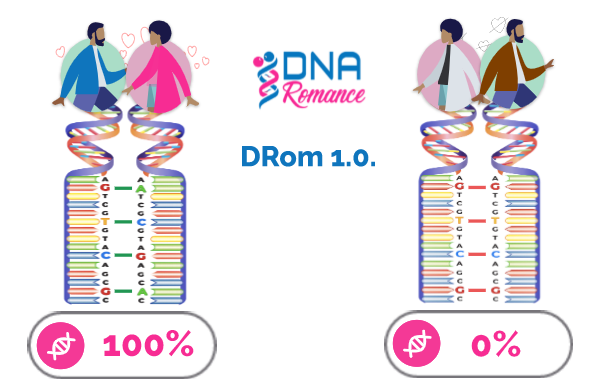
DNA Romance predicts "Chemistry" online using the DRom 1.0 algorithm. This algorithm assesses 100 specific markers within your DNA, focusing on genes proven to be involved in attraction and reproduction. Studies have shown that people with varied DNA markers in the Major Histocompatibility Complex (MHC) tend to find each other’s scent appealing and often enjoy more durable romantic relationships .
DNA Romance também prevê 'compatibilidade de personalidade' Usando tipos de personalidade derivados de testes psicométricos, o aplicativo permite que os usuários avaliam. interesses comuns compartilhados usando filtros, e atração física com base nas fotografias do seu jogo. Romance de DNA second genetic algorithm DRom 2.0 usa um modelo de IA treinado com marcadores de DNA relevantes para prever fenotípicostraços com alta precisão. DRom 2.0 complementa o DNA Romance mecanismo de verificação de perfil que apresenta várias camadas de verificações que ajudam a indicar melhor o usuárioautenticidade do perfil,
Explorar nossos
Classificação de compatibilidade de personalidade
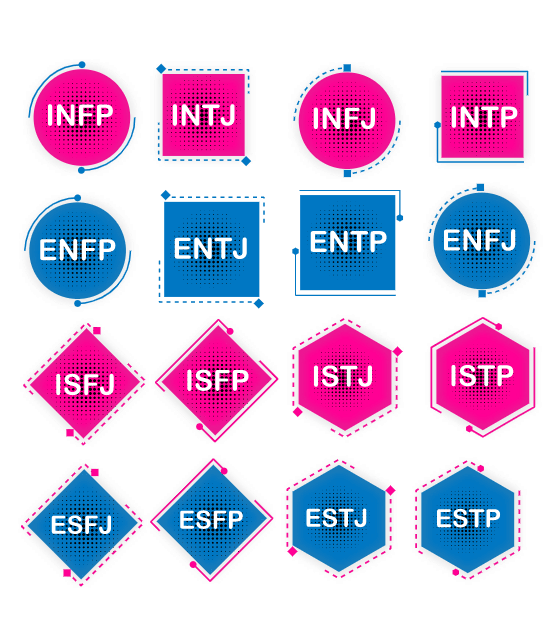
inspired by the renowned Jung/Myers-Briggs 16 personality types. Developed over a century ago by Swiss psychiatrist Dr. Carl Jung and further refined by Isabel Briggs Myers and Katherine Briggs, this psychometric test has stood the test of time. Recognized as the Myers-Briggs Type Indicator®, it's widely used in organizational psychology.
DNA Romance utilizes this personality compatibility algorithm to predict potential connections between both singles and couples. DNA Romance's algorithms strategically assigns higher compatibility scores to similar personality types, and lower scores to those that may conflict.
DNA Romance predicts "Chemistry" using DRom 1.0, an algorithm that analyses Single Nucleotide Polymorphisms (SNPs)confirmed to influence relationship choice in several independent studies. Here we present just a few of the research papers we evaluated in order to develop DRom 1.0 .
Jokiniemi A, Turunen T, Kohonen M et al. (2025) Female-mediated selective sperm activation may remodel major histocompatibility complex-based mate choice decisions in humans Heredity 134, 321–330.
*** This study reveals a paradox: women prefer the body odours of MHC-similar men, but sperm from MHC-dissimilar men exhibit higher motility when exposed to female follicular fluid. This suggests that the most attractive males may not necessarily be the most optimal partners in terms of fertilisation success, indicating that post-copulatory selection can remodel pre-mating mate choice decisions.
Havlíček J, Winternitz J, Roberts S (2020) Major histocompatibility complex-associated odour preferences and human mate choice: near and far horizons Philosophical Transactions of the Royal Society B, 375:20190260.
*** A comprehensive meta-analysis examining MHC-based mate choice in humans. The analysis found no significant overall effect of MHC-similarity on human mate selection when combining genomic studies, relationship satisfaction measures, and odour preference experiments. The authors recommend larger, more diverse samples and greater focus on mechanisms of MHC-associated pregnancy loss.
Dandine-Roulland C, Laurent R, Dall'Ara I, Toupance B e Chaix R (2019) Evidência genômica para acasalamento desassociado do MHC em humanos
This study on major histocompatibility complex (MHC) and mate choice in humans suggests that while couples in Northern Europe tend to exhibit MHC-dissimilarity, potentially indicative of a biological influence on mate choice, social and/or cultural factors in other regions, like Israel, may override or obscure such biologically-driven mating preferences.
Birnbaum GE, Zholtack K, Mizrahi M & Ein-Dor T (2019) A Pílula Amarga: Cessação de Contraceptivos Orais aumenta o apelo dos companheiros alternativo Evolutionary Psychological Science volume 5, pages 276–285
*** Contraceptivos hormonais alteram as preferências de parceiros das mulheres em direção a homens mais protetores, mas cessar o seu uso reverte essas preferências, aumentando a atração por homens geneticamente mais compatíveis, especialmente durante as fases de alta fertilidade, potencialmente motivando a busca de parceiros alternativos.
Wedekind C (2019) A predicted interaction between odour pleasantness and intensity provides evidence for major histocompatibility complex social signalling in women Proc. R. Soc. B 285:20172714.
*** O artigo descreve a conexão entre o Complexo Maior de Histocompatibilidade (MHC) e as preferências de odor em humanos, debatendo os achados anteriores e analisando como a depilação das axilas e outros fatores podem influenciar a percepção do odor corporal e sua ligação com o MHC, com uma reanálise dos dados anteriores revelando que a agradabilidade e a intensidade do odor podem interagir com a dissimilaridade do MHC na influência da comunicação social através do cheiro, implicando uma relação sutil entre o MHC, a percepção do odor e a comunicação social.
Wu K, Chen C, Moyzis RK, Nuno M, Yu Z and Greenberger E (2018) More than skin deep: Major histocompatibility complex (MHC)-based attraction among Asian American speed-daters Evolution and Human Behavior. 39(4):447-456.
*** Em um contexto de speed dating, as mulheres, mas não os homens, mostraram preferências por parceiros com base na complementaridade do Complexo de Histocompatibilidade Maior (MHC) através da análise de SNPs, com diferentes SNPs influenciando a atração de forma direcional com base na proximidade aos principais genes HLA, e índices baseados no MHC tiveram influência comparável aos atributos de personalidade auto-relatados na previsão de ofertas de segunda data para ambos os sexos.
Henningsson S, Hovey D, Vass K, Walum H, Sandnabba K, Santtila P, Jern P, Westberg L (2017) A missense polymorphism in the putative pheromone receptor gene VN1R1 is associated with sociosexual behavior Transl Psychiatry. 7(4):e1102.
*** O estudo descobre uma associação significativa entre um polimorfismo no gene VN1R1, relacionado ao receptor tipo-1 vomeronasal humano (parte do sistema mediando os efeitos dos feromônios), e o comportamento sociosexual em mulheres, particularmente relacionado a encontros de uma noite, sugerindo que a quimiosinalização possa desempenhar um papel na modulação das interações sociais humanas.
Burger D, Meuwly C, Marti E, Sieme H, Oberthür M, Janda J, Meinecke-Tillmann S e Wedekind C. (2017) Preferências correlacionadas ao MHC em éguas diestras (Equus caballus).
Este estudo investigou a influência dos genes do Complexo Principal de Histocompatibilidade (MHC) e dos níveis de testosterona nas preferências de acasalamento de éguas, descobrindo que as éguas demonstraram interesse elevado por garanhões dissimilares em relação ao MHC durante sua fase diestro (período não reprodutivo), mas outras características masculinas não ligadas ao MHC, possivelmente como atributos físicos ou sinais comportamentais, poderiam sobrepor as influências do MHC durante sua fase estro (reprodutiva), com o contexto e a fase do ciclo sendo fundamentais na escolha do parceiro.
Sherlock JM, Sidari MJ, Harris EA, Barlow FK, Zietsch BP (2016) Testing the mate-choice hypothesis of the female orgasm: disentangling traits and behaviours Socioaffect Neurosci Psychol. 6:31562.
*** O estudo sugere que as mulheres experimentam frequências de orgasmo variadas com diferentes parceiros, com aqueles que induzem taxas de orgasmo mais altas sendo percebidos como mais engraçados, criativos, quentes, fiéis e melhor cheirosos, e também sendo mais atentos à satisfação sexual de seu parceiro, parcialmente apoiando a hipótese de escolha de parceiro do orgasmo feminino, que o posiciona como um mecanismo potencial para selecionar parceiros de alta qualidade.
Kromer J, Hummel T, Pietrowski D, Giani AS, Sauter J, Ehninger G, Schmidt AH, Croy I (2016) Influence of HLA on human partnership and sexual satisfaction Sci Rep. 6:32550.
*** O estudo indica que, em humanos, a dissimilaridade HLA (um componente genético do sistema imunológico) pode influenciar a seleção de parceiros e a satisfação sexual, potencialmente através da detecção de pistas olfativas relacionadas à compatibilidade genética, de forma semelhante a mecanismos observados em outros animais, promovendo a diversidade genética e a resistência a patógenos nos descendentes.
Wlodarski R. and Dunbar RIM. (2015) What's in a Kiss? The Effect of Romantic Kissing on Mate Desirability Evol Psychol. 12(1): 178–199.
*** Este estudo descobriu que a percepção da habilidade de beijar românticamente afeta as avaliações de potenciais parceiros, aumentando a desejabilidade especialmente para mulheres em contextos de sexo casual, e, embora as pistas visuais possam substituir o impacto das informações relacionadas ao beijo em determinados cenários de acasalamento, a influência da informação visual atraente parece ser mais potente para os homens do que para as mulheres, aludindo ao papel multifacetado do beijo na comunicação da qualidade e desejabilidade do parceiro, além de outras pistas.
Burger D, Dolivo G, Marti E, Sieme H e Wedekind C. (2015) O tipo de complexo de histocompatibilidade major feminino afeta os níveis de testosterona e o número de espermatozóides nos cavalos (Equus caballus).
Este estudo examina como o Complexo Maior de Histocompatibilidade (MHC) influencia as estratégias reprodutivas masculinas em cavalos. A pesquisa revelou que quando os garanhões foram expostos a fêmeas com tipos MHC diferentes, eles apresentaram níveis mais altos de testosterona e produziram um maior número de espermatozóides por ejaculado em comparação com quando foram expostos a éguas MHC-similares, destacando que os sinais ligados ao MHC podem realmente impactar a produção de testosterona masculina e as características do sêmen, influenciando assim as abordagens reprodutivas.
Christakis NA and Fowler JH (2014) Amizade e seleção natural PNAS. 11:10796–10801.
*** O estudo demonstra que os seres humanos tendem a formar amizades com indivíduos que possuem genótipos semelhantes - semelhantes ao nível de quarto primos - em todo o genoma, e enquanto certos genótipos estão positivamente correlacionados (homofílicos), outros estão negativamente correlacionados (heterofílicos) entre amigos, com conjuntos de genes específicos relacionados ao sistema olfativo e imunológico desempenhando um papel na formação de amizades, propondo que os amigos podem atuar como "parentes funcionais" e sugerindo que os genótipos homofílicos podem oferecer benefícios sinérgicos de fitness que têm influenciado a evolução humana recente.
Laurent R and Chaix R (2012) MHC-dependent mate choice in humans: Why genomic patterns from the HapMap European American dataset support the hypothesis BioEssays. 34(4):267-71.
*** This study supports the hypothesis that humans tend to choose mates with different MHC (Major Histocompatibility Complex) genes than their own, which may promote genetic diversity and immune system strength in offspring.
Lie HC, Simmons LH and Rhodes G (2010) Genetic dissimilarity, genetic diversity, and mate preferences in humans Evolution and Human Behavior 31:8–58.
*** Este estudo explora a influência de fatores genéticos, particularmente o complexo principal de histocompatibilidade (MHC), nas preferências de parceiros em humanos, descobrindo que os machos tendem a preferir fêmeas com MHC-dissimilares tanto em contextos de acasalamento de curto prazo quanto de longo prazo, enquanto a diversidade genética impacta as preferências de parceiros tanto masculinos quanto femininos em diferentes contextos de acasalamento, apoiando assim um papel significativo para o MHC na seleção de parceiros humanos e sugerindo que essas preferências podem funcionar para aumentar a diversidade genética na prole.
Lie HC, Rhodes G and Simmons LH (2010) Is genetic diversity associated with mating success in humans? Animal Behaviour. 79, 4:903-909
*** Este estudo indica que, em humanos, particularmente em fêmeas, a diversidade genética, especialmente dentro do complexo principal de histocompatibilidade (MHC), está associada a um maior sucesso reprodutivo, medido pelo número de parceiros sexuais, apoiando o conceito de que fatores genéticos, potencialmente relacionados ao funcionamento do sistema imunológico, desempenham um papel no sucesso reprodutivo humano, enquanto nenhuma associação significativa foi encontrada em machos.
Chaix R, Cao C, and Donnelly P (2008) Is Mate Choice in Humans MHC-Dependent? PLOS Genetics, 4 (9)
*** O estudo indica que, enquanto as populações euro-americanas podem preferir parceiros com MHC-dissimilares, selecionando por diversidade nos sistemas imunológicos da prole, tal padrão não é encontrado na população africana examinada, sugerindo que a influência do MHC na escolha de parceiros pode ser dependente do contexto e potencialmente moldada por vários fatores.
Schwensow N, Fietz J, Dausmann K, Sommer S (2008) MHC-associated mating strategies and the importance of overall genetic diversity in an obligate pair-living primate Evol Ecol. (22) 617-636
*** O estudo explora a escolha de parceiros no lêmure anão de cauda gorda, descobrindo que as fêmeas preferem machos com maior diversidade genética do MHC e menor sobreposição do MHC como pais sociais e genéticos, enquanto a heterozigosidade genética geral e a parentesco não influenciam significativamente a seleção de parceiros; acasalamentos extra-pares podem ocorrer para mitigar a incompatibilidade genética, destacando uma interação complexa das hipóteses "bons genes como heterozigosidade" e "acasalamento desassortativo" nas estratégias de acasalamento dos primatas.
Wedekind C (2007) The Major Histocompatibility Complex and Perfumers' Descriptions of Human Body Odors Evolutionary Psychology.5(2): 330-343
*** Este experimento revela uma conexão entre o Complexo Principal de Histocompatibilidade (MHC) e as descrições verbais dos odores corporais humanos, demonstrando que perfumistas profissionais podem, até certo ponto, articular componentes de odor corporal correlacionados ao MHC, ressaltando a influência do MHC na percepção olfativa humana e, possivelmente, na seleção de parceiros, dada a função crítica do MHC no funcionamento do sistema imunológico e o impacto previamente notado no odor corporal e na escolha de parceiros.
Garver-Apgar CE, Gangestad SW, Thornill R, Miller RD and Olp JJ (2006) Major histocompatibility complex alleles, sexual responsivity, and unfaithfulness in romantic couples Psychol Sci, 17(10): 830-835.
*** In the context of romantic couples, the study finds that as the proportion of shared Major Histocompatibility Complex (MHC) alleles increases, women's sexual responsivity to their partners decreases, while their number of extra-pair sexual partners and attraction to men other than their primary partners, especially during their fertile phase, increases, suggesting that MHC-dissimilarity might play a role in sexual attraction and partner selection, potentially driven by underlying genetic and reproductive strategies to enhance offspring immunocompetence by maintaining genetic diversity.
Roberts CE, Gosling LM, Carter V and Petrie M (2006) MHC-correlated odour preferences in humans and the use of oral contraceptives Proc. R. Soc. B 275, 2715–2722
*** This study investigates how oral contraceptives influence women's preferences for certain male odours, which are known to be influenced by genes in the Major Histocompatibility Complex (MHC). Previous research has indicated that female preference for MHC-dissimilar male odour may function to increase offspring heterozygosity or minimize inbreeding. Interestingly, it has also been suggested that women using oral contraceptives tend to prefer the scent of MHC-similar males, which runs contrary to this logic. The study utilized a longitudinal design to test women before and after initiating contraceptive pill use, comparing their preferences to a control group of non-pill users. While the study didn't find a significant difference in ratings between odours of MHC-dissimilar and MHC-similar men during the follicular cycle phase in general, it did unearth that single women tended to prefer the odour of MHC-similar men, whereas women in relationships leaned towards the odour of MHC-dissimilar men. This latter finding aligns.
Wedekind C (2006) The Intensity of Human Body Odors and the MHC: Should We Expect A Link? Evolutionary Psychology. 4:85-94
*** Esta pesquisa discerne relações entre alguns genes MHC (Complexo Maior de Histocompatibilidade) e a intensidade e agradabilidade dos odores corporais masculinos, descobrindo que homens com pelo menos um antígeno MHC homozigoto não emitem odores notavelmente mais intensos do que os heterozigotos, no entanto, seus aromas são percebidos como significativamente mais fortes por mulheres com MHC dissimilares.
Pause BM, Krauel K, Schrader C, Sojka B, Westphal E, Müller-Ruchholtz W, and Ferstl R. (2006) The human brain is a detector of chemosensorily transmitted HLA-class I-similarity in same- and opposite-sex relations Proc. R. Soc. B (2006) 273, 471–478 doi:10.1098/rspb.2005.3342
*** This study reveals that humans subconsciously detect and respond to body odors from individuals with similar HLA (Human Leucocyte Antigen) genetic markers, which might play a critical role in social interactions and mate selection by acting as subtle social signals within both same-sex and opposite-sex relationships.
Martins Y, Preti G, Crabtree CR, Runyan T, Vainius AA and Wysocki CJ (2005) Preference for Human Body Odors Is Influenced by Gender and Sexual Orientation Psychological Science, 16(9) 694-702
*** Este estudo demonstra que a orientação sexual e o gênero influenciam as preferências dos indivíduos por odores corporais humanos, com homens e mulheres heterossexuais e homossexuais apresentando preferências distintas em duas escolhas quando expostos a odores corporais de indivíduos de diferentes combinações de gênero e orientação sexual, implicando que o odor corporal pode ser um fator na seleção de parceiros sexuais e sociais.
Horton R, Wilming L, Rand V, Lovering RC, Bruford EA, Khodiyar VK, Lush MJ, Povey S, Talbot CC Jr, Wright MW, Wain HM, Trowsdale J, Ziegler A, Beck S (2004) Gene map of the extended human MHC. Nat Rev Genet 5(12):889-899
*** This study characterises an integrated gene map of the extended human MHC, a pivotal region in the vertebrate genome for infection and autoimmunity due to its essential role in both adaptive and innate immunity, highlighting its significant content related to paralogy, polymorphism, immune functionality, and its association with various diseases, providing a comprehensive view stemming from the assimilation of data from several large-scale studies.
Jacob S, McClitock MK, Zelano B and Ober C (2002) Paternally inherited HLA alleles are associated with woman's choice of male odour Nature Genetics, 30:175
*** This study demonstrates that women can discern differences in male body odor influenced by a single variance in HLA (human MHC) allele, with a woman's capacity to distinguish and prefer certain odors notably being based on HLA alleles inherited from her father and not her mother; this suggests that paternally inherited HLA-associated odors influence odor preference and might function as social cues, even despite a milieu of potential odors derived from a variety of genetic and cultural factors.
Milinski M and Wedekind C (2001) Evidence for MHC-correlated perfume preference in humans Behavioural Ecology 12(2):140-149
*** O estudo explora a relação entre os genótipos do Complexo Principal de Histocompatibilidade (MHC) e as preferências de perfume em humanos. Eles descobriram uma correlação notável entre o MHC de um indivíduo (especificamente HLA-A, -B, -DR) e suas avaliações de várias fragrâncias para uso pessoal, com certos tipos de HLA (por exemplo, HLA-A2) mostrando preferências de fragrância consistentes. No entanto, quando se tratou de preferências pelo cheiro de um parceiro, a correlação foi em grande parte insignificante, alinhando-se com a hipótese de que os indivíduos escolhem perfumes para uso pessoal para possivelmente melhorar ou amplificar seus próprios odores corporais imunogenéticos reveladores, em vez de alterar os cheiros percebidos de seus parceiros.
Wedekind C, Seebeck T, Bettens F And Paepke AJ (1995) MHC-dependent mate preferences in humans. Proc.R.Soc.Lond.B. 260:245-249.
*** Este estudo descobriu que as pessoas tendem a preferir os odores corporais de potenciais parceiros que têm genes do sistema imunológico diferentes dos seus, mas essa preferência muda para mulheres que estão usando anticoncepcionais.
MHC similarity between couples is known to cause issues with family planning, here are some of the peer-reviewed papers describing the role of MHC similarity and human reproduction .
* demonstrated increased rates of recurrent spontaneous abortion among Hutterite couples matching for HLA-DQA1 alleles
Ober., Steck., Ven., Billstrand., Messer., Kwak., Beaman., Beer (1993) MHC class II compatibility in aborted fetuses and term infants of couples with recurrent spontaneous abortion Journal of Reproductive Immunology, Volume 25, Issue 3, December 1993, Pages 195-207
* results of a 10 year study that demonstrated increased fetal loss rates among Hutterite couples matching for HLA antigens.
Ober C, Hyslop T, Elias S, Weitkamp LR, Hauck WW (1998) Human leukocyte antigen matching and fetal loss: results of a 10 year prospective study Human Reproduction, Volume 13, Issue 1, Jan 1998, Pages 33–38
* describe the relationship between HLA similarity at individual alleles, as well as HLA haplotypes as indicators for increased risk of fetal loss among Hutterite couples.
Ober C (1999) Studies of HLA, fertility and mate choice in a human isolate Hum Reprod Update 5(2):103-107.
* identified differential association of alleles in HLA-A, HLA-B, HLA-C, and HLA-DRB1 when compared with reported world RSA patients.
Shankarkumar U, Pawar A, Gaonkar P, Parasannavar D, Salvi V, and Ghosh K (2008) HLA allele associations in idiopathic recurrent spontaneous abortion patients from India J Hum Reprod Sci. 2008 Jan;1(1):19-24.
* found an increased frequency of homozygosity for HLA-E*0101 in Egyptian women with RM
Mosaad YM, Abdel-Dayem Y, El-Deek BS and El-Sherbini SM (2011) Association between HLA-E *0101 homozygosity and recurrent miscarriage in Egyptian women Scand J Immunol. 2011 Aug;74(2):205-9.
* performed a meta-analyses of 41 studies and showed that HLA-B sharing and HLA-DR sharing were both associated with the occurrence of RM.
Meuleman T, Lashley LE, Dekkers OM, van Lith J, Claas FH and Bloemenkamp KW (2015) HLA associations and HLA sharing in recurrent miscarriage: A systematic review and meta-analysis Hum Immunol. May;76(5):362-73.
* proposed a genetic-risk calculation that could predict recurrent miscarriage (RM) based on analysing HLA haplotypes from couples either with histories of successful pregnancies or RM.
Mora-Sánchez A, Aguilar-Salvador D, Nowak I (2019) Towards a gamete matching platform: using immunogenetics and artificial intelligence to predict recurrent miscarriage NPJ Digit Med Mar 7;2:12.
* found that sperm viability was associated with partners' HLA dissimilarity, indicating that cervical mucus may selectively facilitate later gamete fusion between immunogenetically compatible partners.
Jokiniemi A, Magris M, Ritari J, Kuusipalo L, Lundgren T, Partanen J and Kekäläinen J (2020) Post-copulatory genetic matchmaking: HLA-dependent effects of cervical mucus on human sperm function Proc Biol Sci., doi: 10.1098/rspb.2020.1682.
* demonstrated that HLA eplet dissimilarity positively affects sperm viability in follicular fluid, providing evidence that cryptic female choice operates at the gamete level to favour immunologically compatible partners.
Magris M, Jokiniemi A, Kuusipalo L, Ritari J, Koskela S, Partanen J and Kekäläinen J (2021) Structural dissimilarity of partners' immune genes increases sperm viability in women's reproductive tract Journal of Evolutionary Biology, 34(7):1125-1134.
* demonstrated that soluble HLA-G secreted by embryos into IVF culture medium correlates with implantation success and pregnancy rates, confirming the importance of HLA molecules in early pregnancy.
Lédée N, Petitbarat M, Chevrier L, et al. (2022) The impact of soluble HLA-G in IVF/ICSI embryo culture medium on implantation success Front Immunol. 13:982518.
* found that over 70% of couples with recurrent miscarriages or IVF failures showed high HLA-DQA1 allele similarity, supporting the role of HLA compatibility in reproductive outcomes.
Pafilis I, Michou V, Tsilivakos V, et al. (2023) Human Leukocyte Antigen Alleles Compatibility and Immunophenotypic Profile Associations in Infertile Couples Int J Mol Sci. 24(6):5350.
* found that primary infertile couples (N=609) share more HLA alleles than expected by chance, suggesting HLA similarity may contribute to unexplained infertility and IVF failure.
Kolańska K, Grześ S, Łukaszuk K, et al. (2025) Primary infertile couples share more HLA alleles than expected by chance European Journal of Obstetrics & Gynecology and Reproductive Biology.
MHC-based mate choice is not unique to humans—it is an evolutionarily conserved mechanism found across all vertebrate species studied. Research in fish, birds, rodents, primates, and horses demonstrates that MHC genes influence partner selection, reproductive success, and offspring fitness throughout the animal kingdom. This conservation across 450 million years of vertebrate evolution underscores the fundamental biological importance of MHC compatibility in reproduction.
* Landmark study demonstrating that house mice prefer mates with dissimilar MHC genotypes. Mice detect MHC differences through urine odor cues, and MHC-disassortative mating preferences result in a 27% deficit of MHC homozygous offspring in wild populations.
Penn DJ and Potts WK (1999) The evolution of mating preferences and major histocompatibility complex genes The American Naturalist, 153(2):145-164.
* Demonstrated that female three-spined sticklebacks (Gasterosteus aculeatus) use odor-based MHC detection to select mates that will produce offspring with optimal MHC diversity, equipping them with maximal resistance to pathogens and parasites.
Milinski M, Griffiths S, Wegner KM, Reusch TBH, Haas-Assenbaum A, Boehm T (2005) Mate choice decisions of stickleback females predictably modified by MHC peptide ligands PNAS, 102(12):4414-4418.
* Found that both male and female sticklebacks with intermediate MHC class IIB diversity had the highest lifetime reproductive success, demonstrating that optimal (not maximal) MHC diversity maximizes fitness.
Kalbe M, Eizaguirre C, Dankert I, Reusch TBH, Sommerfeld RD, Wegner KM, Milinski M (2009) Lifetime reproductive success is maximized with optimal major histocompatibility complex diversity Proceedings of the Royal Society B, 276(1658):925-934.
* In the grey partridge, females preferentially paired with males having more dissimilar MHC, with lower numbers of shared amino acid variants. This supports the 'inbreeding avoidance' and 'complementary genes' hypotheses in a strictly monogamous bird species.
Løvlie H, Gillingham MAF, Worley K, Pizzari T, Richardson DS (2017) Mate choice for major histocompatibility complex complementarity in a strictly monogamous bird, the grey partridge (Perdix perdix) Frontiers in Zoology, 14:9.
* Wild-spawning Atlantic salmon that chose their own mates produced offspring with 4× lower parasite loads than artificially crossed salmon, despite similar MHC diversity—demonstrating that MHC-mediated mate choice directly increases offspring fitness.
Consuegra S, de Leaniz CG (2008) MHC-mediated mate choice increases parasite resistance in salmon Proceedings of the Royal Society B, 275(1641):1397-1403.
* Discovered that MHC peptides trigger olfactory imprinting in zebrafish during a critical developmental period, creating persistent kin recognition preferences—demonstrating a fundamental mechanism by which vertebrates learn to recognize MHC-similar individuals.
Gerlach G, Hodgins-Davis A, Avolio C, Schunter C (2013) Olfactory imprinting is triggered by MHC peptide ligands Scientific Reports, 3:2800.
* Found non-random mating based on MHC in Chinook salmon—females directed more aggression toward MHC-similar males than MHC-dissimilar males, providing behavioral evidence for active mate discrimination based on immune genes.
Neff BD, Garner SR, Heath JW, Heath DD (2008) The MHC and non-random mating in a captive population of Chinook salmon Heredity, 101:175-185.
* In a study of 191 mares, females were significantly more likely to become pregnant when exposed to MHC-dissimilar stallions (p=0.019), demonstrating "cryptic female choice" influenced by MHC social signalling in horses.
Burger D, Meuwly C, Marti E, Sieme H, Oberthür M, Janda J, Meinecke-Tillmann S, Wedekind C (2017) MHC-linked social signalling affects female fertility in horses Proceedings of the Royal Society B, 284:20161998.
* Found that stallions exposed to MHC-dissimilar mares exhibited 19.2%% higher testosterone levels and produced more sperm per ejaculate, demonstrating that MHC-linked signals directly affect male reproductive strategies.
Burger D, Dolivo G, Marti E, Sieme H, Wedekind C (2015) O tipo de complexo de histocompatibilidade major feminino afeta os níveis de testosterona e o número de espermatozóides nos cavalos (Equus caballus). Proceedings of the Royal Society B, 282:20150407.
* Meta-analysis of 58 effect sizes from 30 studies across seven primate species found a significant trend favouring MHC-diverse mates. The analysis confirms MHC-based mate preferences operate across the primate lineage.
Winternitz J, Abbate JL, Huchard E, Havlíček J, Garamszegi LZ (2017) Patterns of MHC-dependent mate selection in humans and nonhuman primates: a meta-analysis Molecular Ecology, 26(2):668-688.
* In wild grey mouse lemurs from Madagascar, found evidence for post-copulatory mate choice associated with MHC constitution—fathers had higher numbers of MHC supertypes different from mothers than randomly assigned males.
Schwensow N, Eberle M, Sommer S (2008) Compatibility counts: MHC-associated mate choice in a wild promiscuous primate Proceedings of the Royal Society B, 275(1634):555-564.
* Building on Burger's work, found that stallion semen quality depends on MHC matching to teaser mares—semen collected in the presence of MHC-dissimilar mares had higher sperm concentration and better motility.
Jeannerat E, Marti E, Berney C, Janett F, Bollwein H, Sieme H, Burger D, Wedekind C (2018) Stallion semen quality depends on major histocompatibility complex matching to teaser mare Molecular Ecology, 27(4):1025-1035.
* First evidence for MHC-based mate choice in reptiles: female Chinese alligators preferentially mate with MHC-heterozygous males that are genetically compatible, extending MHC mate choice to crocodilians.
Wang H, Shen FJ, Min MS, Wu XB, Yue BS, Yan P (2018) MHC class I diversity predicts non-random mating in Chinese alligators (Alligator sinensis) Heredity, 122:809-818.
* Found evidence for MHC-disassortative mating in the tuatara, a "living fossil" reptile—demonstrating that MHC-based mate choice has been conserved since the Triassic period (>200 million years ago).
Miller HC, Moore JA, Nelson NJ, Daugherty CH (2009) Influence of major histocompatibility complex genotype on mating success in a free-ranging reptile population Proceedings of the Royal Society B, 276(1662):1695-1704.
* In Seychelles warblers, when females' social mates were MHC-similar, they were more likely to engage in extra-pair copulations, with extra-pair males being significantly more MHC-dissimilar than social mates.
Richardson DS, Komdeur J, Burke T, von Schantz T (2005) MHC-based patterns of social and extra-pair mate choice in the Seychelles warbler Proceedings of the Royal Society B, 272(1564):759-767.
* Demonstrated that MHC-based mate choice in sticklebacks can drive ecological speciation, showing that immunogenes not only influence individual fitness but can shape evolutionary divergence between populations.
Eizaguirre C, Lenz TL, Kalbe M, Milinski M (2018) Mate choice in sticklebacks reveals that immunogenes can drive ecological speciation Behavioral Ecology, 28(4):953-961.
* Found in ring-necked pheasants that male spur length (a sexually selected ornament) was correlated with MHC genotype, demonstrating that sexual ornaments can signal genetic quality at immune genes.
von Schantz T, Wittzell H, Goransson G, Grahn M, Persson K (1996) MHC genotype and male ornamentation: genetic evidence for the Hamilton-Zuk model Proceedings of the Royal Society B, 263(1368):265-271.
* Quantitative review of MHC-based mating preferences across 50+ vertebrate species found significant effects for both MHC diversity and dissimilarity preferences, confirming MHC-mediated mate choice as a widespread vertebrate phenomenon.
Kamiya T, O'Dwyer K, Westerdahl H, Senior A, Nakagawa S (2014) A quantitative review of MHC-based mating preference: the role of diversity and dissimilarity Molecular Ecology, 23(21):5151-5163.
* Demonstrated MHC-based mate choice in sand lizards—females preferred MHC-dissimilar males, showing that reptiles can recognize both their own genotype and that of potential partners through scent cues.
Olsson M, Madsen T, Nordby J, Wapstra E, Ujvari B, Wittsell H (2003) Major histocompatibility complex and mate choice in sand lizards Proceedings of the Royal Society B, 270(Suppl 2):S254-S256.
* Found that frog tadpoles use MHC-based self-referent cues to preferentially associate with MHC-similar kin—demonstrating that MHC recognition operates in amphibians from early developmental stages.
Villinger J, Waldman B (2008) Self-referent MHC type matching in frog tadpoles Proceedings of the Royal Society B, 275(1640):1225-1230.
* Found that MHC-divergent male tiger salamanders had reduced mating success compared to males with intermediate MHC divergence—supporting the optimal MHC diversity hypothesis in amphibians.
Bos DH, Williams RN, Gopurenko D, Bulut Z, DeWoody JA (2009) Condition-dependent mate choice and a reproductive disadvantage for MHC-divergent male tiger salamanders Molecular Ecology, 18(15):3307-3315.
* Comprehensive review of MHC odor signaling mechanisms across vertebrates—synthesizes decades of research on how fish, mice, horses, and humans detect MHC differences through olfactory cues.
Milinski M (2022) A Review of Suggested Mechanisms of MHC Odor Signaling Biology, 11(8):1187.
Our personality compatibility rating is based on the Myers-Briggs 16 personality types. This test has a long history with the development of the first 3 components dating back almost 100 years to Dr. Carl Jung and today the 4 letters and 16 personality type groups are widely known to the majority of people. DNA Romance's personality compatibility algorithm, called PC1, puts maximum weight on similar personality types and less weight towards personality types that tend to clash.
Lok C (2012) Career development: What's your type? Nature, 488: 545-547
* The article highlights the utilization of the Myers-Briggs Type Indicator and similar personality tests in assisting scientists to enhance their soft skills and navigate their careers by providing insights into their personality traits, which can inform their communication, leadership, and teamwork strategies within professional environments.
Keirsey, D (2006) Please Understand Me II (3rd ed) Promethius Nemesis Book Co., Del Mar, CA.
Por Favor Entenda-me é um livro de psicologia escrito por David Keirsey e Marilyn Bates que usa um questionário auto-avaliado, o Keirsey Temperament Sorter, para categorizar indivíduos em um dos dezesseis tipos de personalidade e quatro tipos mais amplos de temperamento (Artista, Guardião, Racional e Idealista), oferecendo aos leitores insights sobre seus padrões comportamentais e valores fundamentais, ao mesmo tempo em que se baseia e simplifica teorias psicológicas e indicadores de tipo anteriores, notavelmente o Myers-Briggs Type Indicator.
Myers IB, McCaulley MH, Quenk NL and Hammer AL (1998) MBTI manual: A guide to the development and use of the Myers-Briggs Type Indicator Consulting Psychologists Press, Palo Alto, CA, Vol. 3.
O Manual MBTI®, terceira edição, serve como um guia abrangente, detalhando o desenvolvimento, aplicação e interpretação do instrumento Myers-Briggs Type Indicator® , fornecendo informações aprofundadas sobre a teoria, confiabilidade e validade da ferramenta e oferecendo insights sobre os 16 tipos de personalidade que ela identifica, todos escritos por especialistas líderes em tipo psicológico, Isabel Briggs Myers, Mary H. McCaulley, Naomi L. Quenk e Allen L. Hammer.
Myers IB, McCaulley MH and Most R (1985) Manual, a guide to the development and use of the Myers-Briggs type indicator Consulting Psychologists Press.
The 1985 edition, 'Manual: A Guide to the Development and Use of the Myers-Briggs Type Indicator,' introduces and elucidates the Myers-Briggs Type Indicator (MBTI®), designed to render C. G. Jung's psychological type theory comprehensible and applicable in daily life, underlining the principle that behavioral variations, while seemingly sporadic, are consistently orderly, deriving from intrinsic differences in individuals' preferred use of perception and judgment.
Myers IB (1962) Manual, a guide to the development and use of the Myers-Briggs type indicator. Consulting Psychologists Press.
The 1962 manual for the Myers-Briggs Type Indicator provides comprehensive insights and guidelines for implementing C. Jung's theory of psychological types, asserting that behavioral variations are systematic and consistent due to basic perceptual and judgmental preferences, aiming to leverage these preferences through self-reports to ascertain individual psychological types, thereby enabling the practical application and research into their effects on reactions, motivations, values, and capabilities.
Jung CG (1923) Psychological types: or the psychology of individuation Oxford, England: Harcourt, Brace.
Tipos Psicológicos, de Carl Gustav Jung, publicado pela primeira vez em 1923, introduz a seminal teoria psicológica da tipologia, apresentando uma estrutura que busca explicar as diversas e aparentemente aleatórias diferenças na personalidade através de uma teoria sistemática e ordenada, propondo que as variações fundamentais no comportamento humano surgem devido às diferenças inerentes na forma como os indivíduos preferem utilizar suas funções cognitivas de percepção e julgamento, fornecendo o embasamento para inúmeras teorias e avaliações de personalidade a seguir, notavelmente o Indicador de Tipo Myers-Briggs (MBTI).